At a World Cup, heat is usually treated as a performance variable: who tires first, who presses less, who manages substitutions better. In 2026, it is increasingly a public-health and event-planning question. Reports on cooling gear, hydration breaks and heat precautions for the tournament highlight a simple reality: global sport is now operating in a climate where heat management is not a side issue.
The 2026 tournament is spread across Canada, the United States and Mexico, with huge distances, different climates and a summer calendar. Some venues may be mild, some hot and humid, and others affected by urban heat. The challenge is not only protecting elite players. It is also protecting fans, volunteers, workers, security staff, media crews and transport systems around the event.
Hydration breaks are the visible part
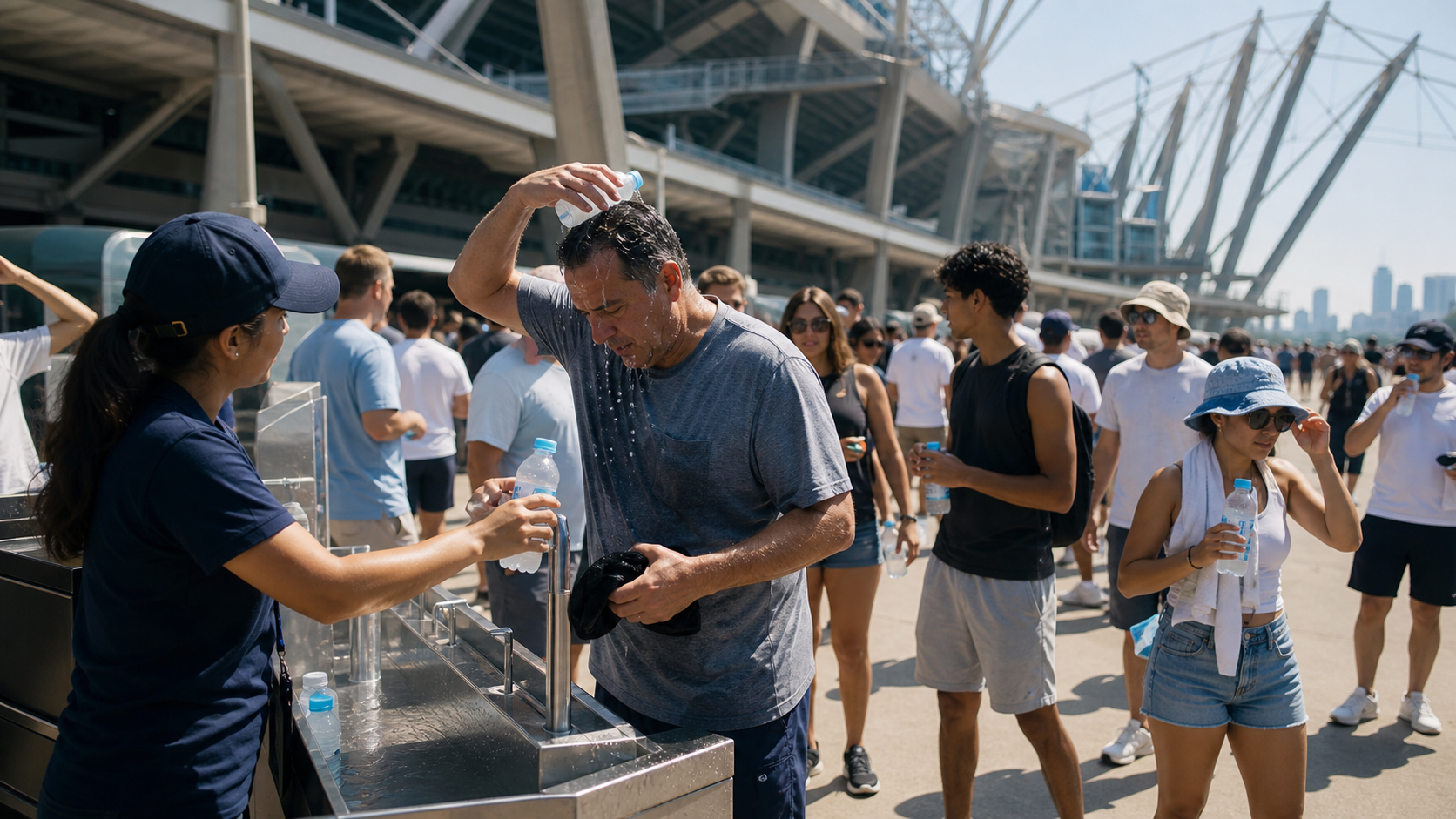
Hydration breaks are easy for television audiences to understand. Players pause, drink, cool down and reset. But they are only the visible edge of a broader risk system. Heat planning includes training schedules, medical protocols, shaded areas, water access, transport timing, staff rotations, emergency response, stadium design and communication to ticket holders.
For athletes, heat affects endurance, decision-making and recovery. For spectators, especially older people, children and those with health conditions, heat can become dangerous even without intense activity. A fan walking from public transport through a concrete concourse in the afternoon may face more risk than the broadcast suggests.
Why global sport is exposed
Mega-events are designed years in advance, but climate risk is increasingly variable. A city chosen for its infrastructure may still face a dangerous heatwave. A roofed stadium may protect players but leave fans exposed outside. Evening kick-offs may help but collide with global broadcast schedules. The more a tournament serves a worldwide television market, the harder local health conditions can be to prioritise without trade-offs.
This is not unique to football. Tennis, athletics, cricket, cycling and marathons are all confronting heat rules, air quality and athlete welfare. Football’s challenge is scale. The World Cup brings millions of movements across many cities, and heat risk multiplies through transport, queues, fan zones and casual outdoor gathering.
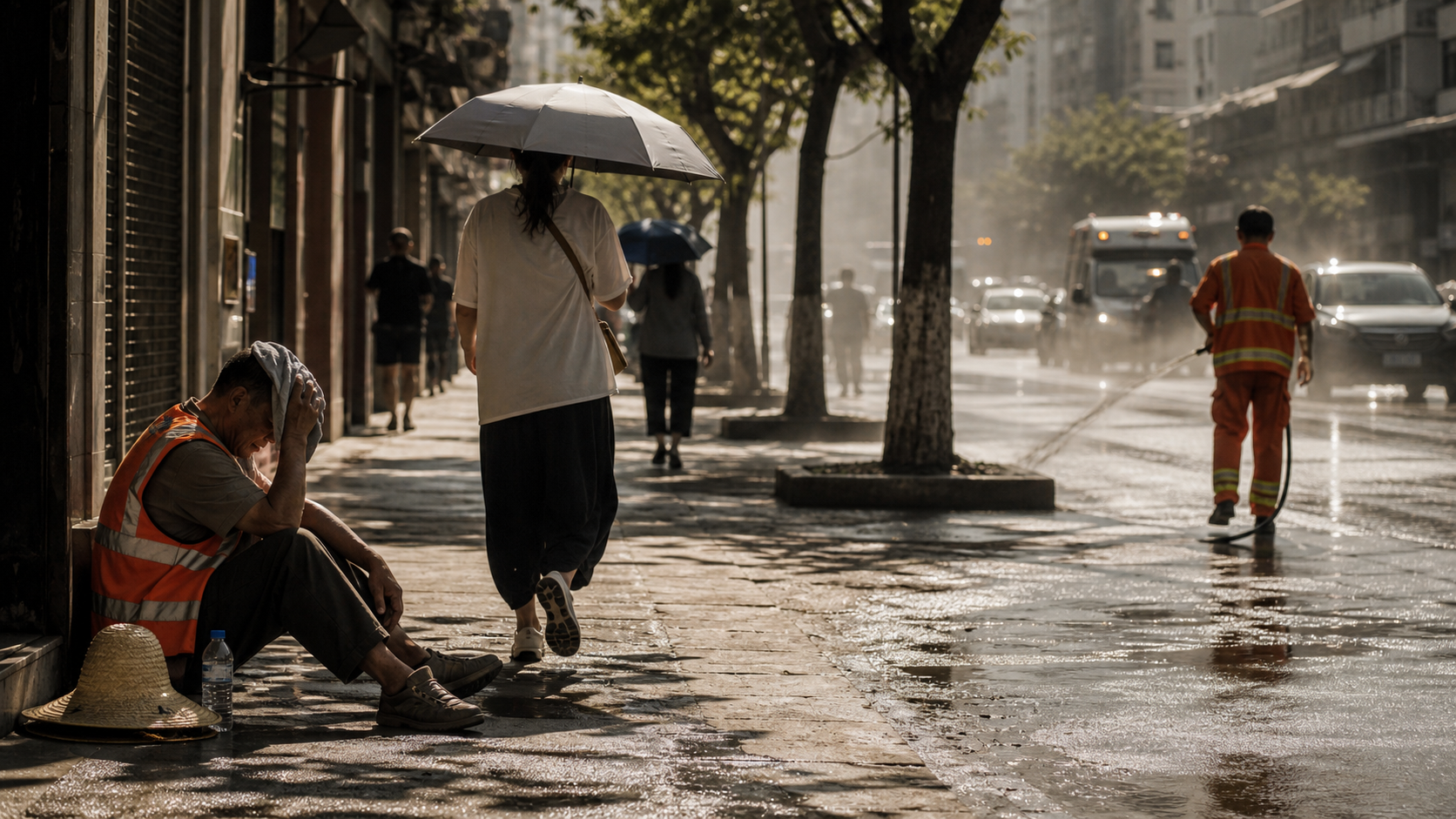
Workers are part of the story too. Security staff, cleaners, transport workers, food vendors, volunteers and emergency responders can spend long hours in exposed conditions while fans move in and out. A heat plan that focuses only on elite athletes misses the larger labour system that makes a tournament possible. In a hotter climate, worker safety is not a back-office issue; it is part of event legitimacy.
What good adaptation looks like
Good heat adaptation is boring in the best sense. It means clear thresholds for breaks and delays, enough free water, shaded queues, medical staffing, venue-level heat plans, worker protections and public messaging before people arrive. It also means treating fans as participants in the safety system, not simply consumers.
The tournament organisers will have medical and operational protocols. The public-interest question is how those protocols are communicated and enforced under commercial pressure. If a high-profile match is scheduled at a difficult time, who has authority to alter plans? If a heat warning is issued, how are ticket holders told what to bring, where to go and when to seek help? If transport is delayed, are people left waiting in exposed areas?
The communication challenge is especially difficult because many fans will be visitors. They may not understand local heat warnings, distances, transit systems or the difference between dry heat and humid heat. Multilingual, plain-language guidance will matter. So will physical design: shade, seating, refill points and visible medical help often do more than another advisory page that travellers never open.
The climate signal
There is a temptation to treat heat precautions as proof that sport can simply adapt. That is only partly true. Better gear, smarter schedules and safer venues matter, but adaptation has limits. Extreme heat changes the economics and ethics of outdoor events. It raises questions about who bears risk: athletes paid to perform, fans who buy tickets, local workers, city agencies, or volunteers.
It also changes how future hosts are judged. Stadium capacity and sponsorship may no longer be enough. Climate resilience, water access, public transport, shaded public space and emergency planning are becoming part of event infrastructure. A World Cup bid in a hotter world is a health-planning document whether it admits it or not.
What to watch during the tournament
Watch whether hydration breaks are applied consistently, whether kick-off times become controversial, whether fan zones have adequate shade and water, and whether worker safety receives as much attention as player performance. Watch also how broadcasters talk about heat. If it is framed only as a tactical challenge, the public-health story will be missed.
Also watch the difference between rich and less wealthy fans. People with hospitality tickets, nearby hotels and private transport can manage heat more easily than supporters walking long distances, using crowded public transport or waiting outside with children. Climate risk often exposes inequality quietly. The same matchday temperature can be a manageable inconvenience for one group and a health threat for another.
The lesson will extend beyond football. Cities that host concerts, marathons, festivals and religious gatherings will face similar questions. Heat planning is becoming part of civic competence. A tournament that gets it right can leave a useful template; a tournament that treats heat as background weather may teach the lesson the hard way.
The 2026 World Cup will still be a celebration of football. But the heat debate shows that the conditions of celebration are changing. In a hotter climate, the best-run tournament may be the one where viewers barely notice the safety systems because they worked.
Sources: FIFA World Cup 26 information、CDC heat and health guidance and NOAA climate information.