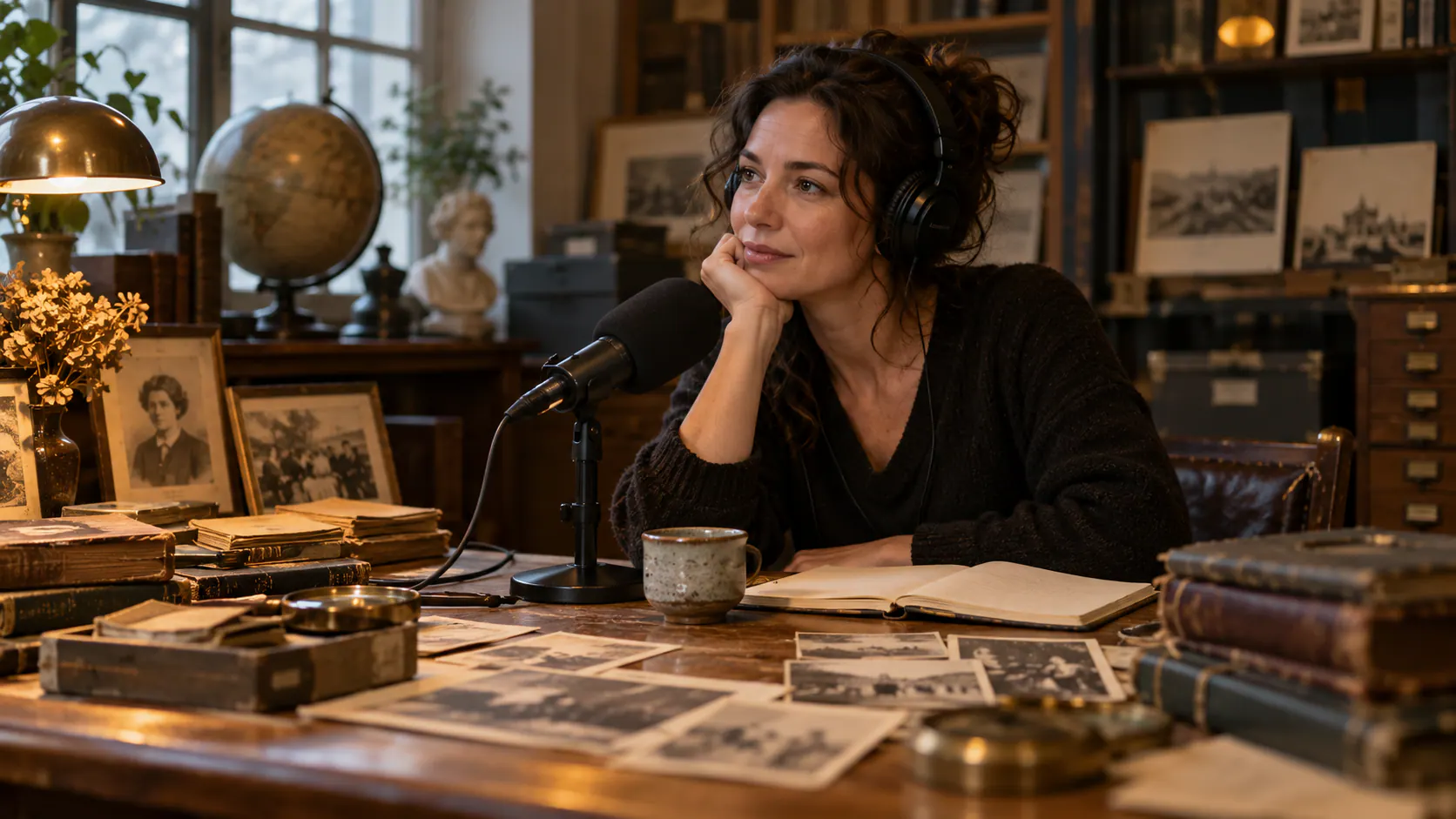
History podcasts often promise to explain an era. The Memory Palace usually begins smaller: a person, an object, a room or a moment that almost disappeared from the record. Host Nate DiMeo then builds a brief narrative in which detail carries more weight than summary.
The show is worth recommending as a form, not because every episode follows the same formula. Its restraint demonstrates how research, voice and music can create feeling without turning the past into a motivational lesson.
Scale is the creative decision
A narrow frame allows names, gestures and uncertainty to survive. The listener enters an event instead of receiving a timeline.
Archives have absences
Whose letters were preserved and whose voice was never recorded shape the story. Responsible narration acknowledges inference.
Music changes the reading
The score creates pace and emotion, but listeners should notice when sound is interpretation rather than evidence.
Short does not mean thin
Compression works because the episode chooses a precise question. It does not pretend to replace a book.
The host leaves space
Pauses and unanswered details respect the fact that some lives cannot be fully recovered.
A good listening method
Hear the episode once for the story, then read its notes and follow one source. That second pass reveals the craft.
Why it belongs in a reading culture
The show often sends listeners outward, toward biographies, archives and local history. Audio becomes a doorway rather than a substitute.