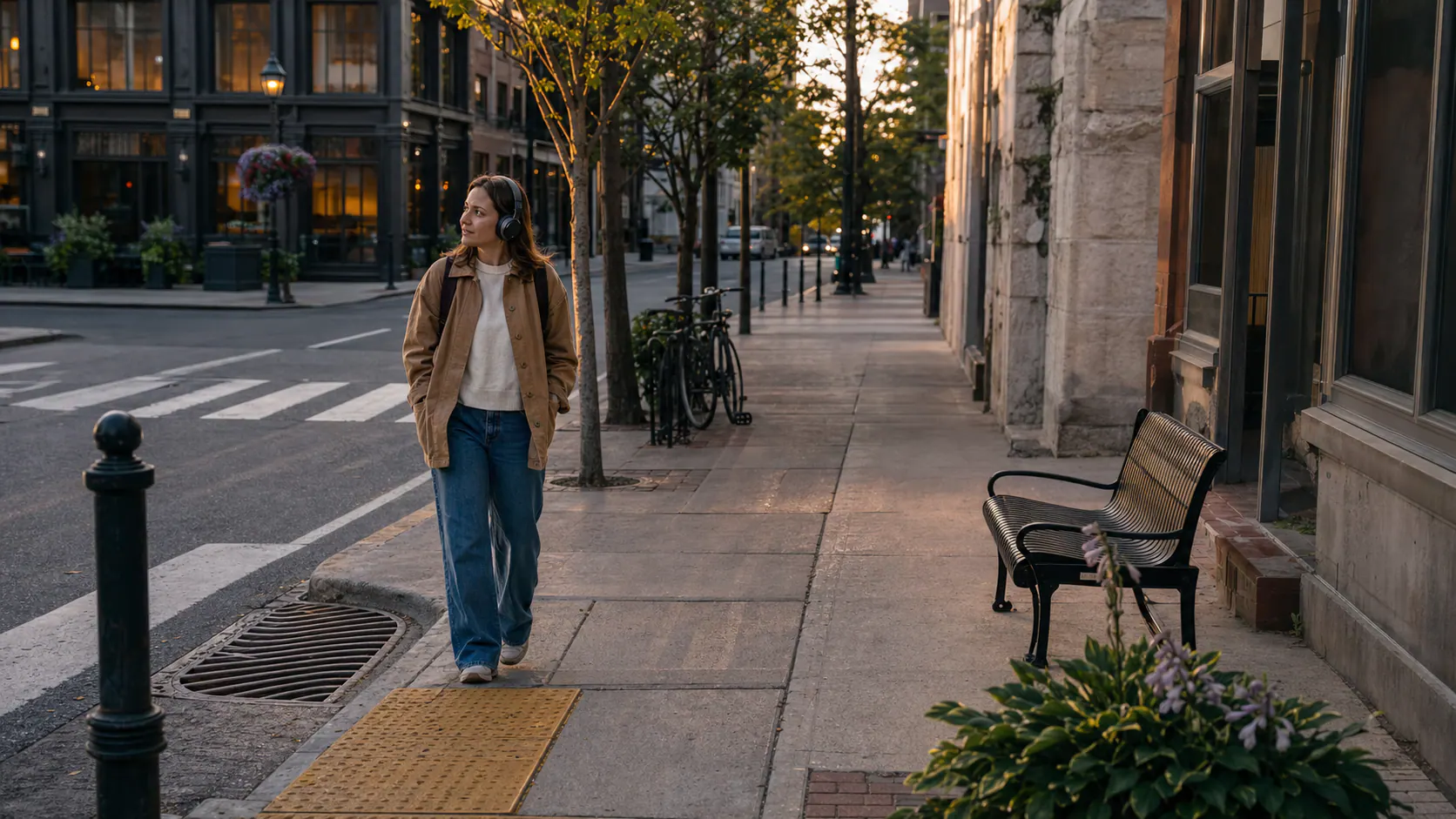
A curb cut, a storm drain, a bench divider and the painted marks left by utility crews can look like background clutter. After listening to 99% Invisible, they become evidence: of a safety decision, a disability campaign, a maintenance system or a political choice about who is welcome to stop.
Hosted by Roman Mars, the long-running podcast describes itself as a show about the unnoticed architecture and design shaping the world. That premise is broad enough to include buildings, infrastructure, objects, sounds and visual systems, but the episodes work because they usually begin with one concrete thing.
Small objects carry large systems
Design stories become memorable when an object provides a handle. A sign contains typography, regulation and navigation; a drinking fountain contains plumbing, public health and an idea of who deserves free water. The object prevents the argument floating away.
The show’s producers then widen the frame through archives, interviews and sound. The listener learns not only who designed something, but which constraints, compromises and power relationships made that design durable.
Audio is unusually suited to invisible design
A photograph can show a building immediately. Audio asks the host to guide attention, which can make listeners more active observers. Field recordings give materials and spaces a presence: traffic changes at a crossing, a room reverberates, a machine establishes rhythm.
Roman Mars’s calm delivery is part of the appeal, but the production is not merely soothing. Strong episodes introduce conflict and reveal that “good design” depends on whose body, budget and future the designer considered.
Listen for the missing user
Whenever an episode explains an elegant solution, ask who was excluded from the brief. Accessibility, maintenance labour, cultural meaning and climate resilience often appear after a system has been celebrated for efficiency. The podcast increasingly makes those consequences part of the story.
That habit transfers to New Zealand streets. A bus stop without shelter, a crossing that allows too little time or a public seat designed to prevent lying down is policy expressed through dimensions and materials.
A practical listening route
New listeners do not need to start at episode one. Choose a subject close to home: housing, transport, public space, technology or an everyday object. Listen on a walk, then identify three designed features you normally ignore.
Avoid turning every observation into instant criticism. Some odd details are responses to drainage, seismic rules, maintenance or previous failures. Curiosity should precede judgement; the pleasure of the show is learning to ask the person who knows.
What the format does especially well
Many public debates begin at the moment a project becomes controversial. 99% Invisible often reconstructs the earlier decisions that narrowed the available choices. That historical depth shows why changing a system can be expensive even when its flaws are obvious.
It also restores visibility to engineers, fabricators, archivists, activists and maintenance workers whose decisions keep cities functioning. Design is not only the name on a building.
A different city after listening
The best recommendation is not that every episode reaches the same standard or conclusion. It is that the programme changes the listener’s attention. The built world becomes neither natural nor inevitable; it becomes a series of choices that can be investigated and revised.
Take one episode into the street and the title begins to make sense. Much of a city’s organising intelligence is invisible until it fails or someone teaches you where to look. This podcast does the latter, with enough story to make observation feel like discovery rather than homework.