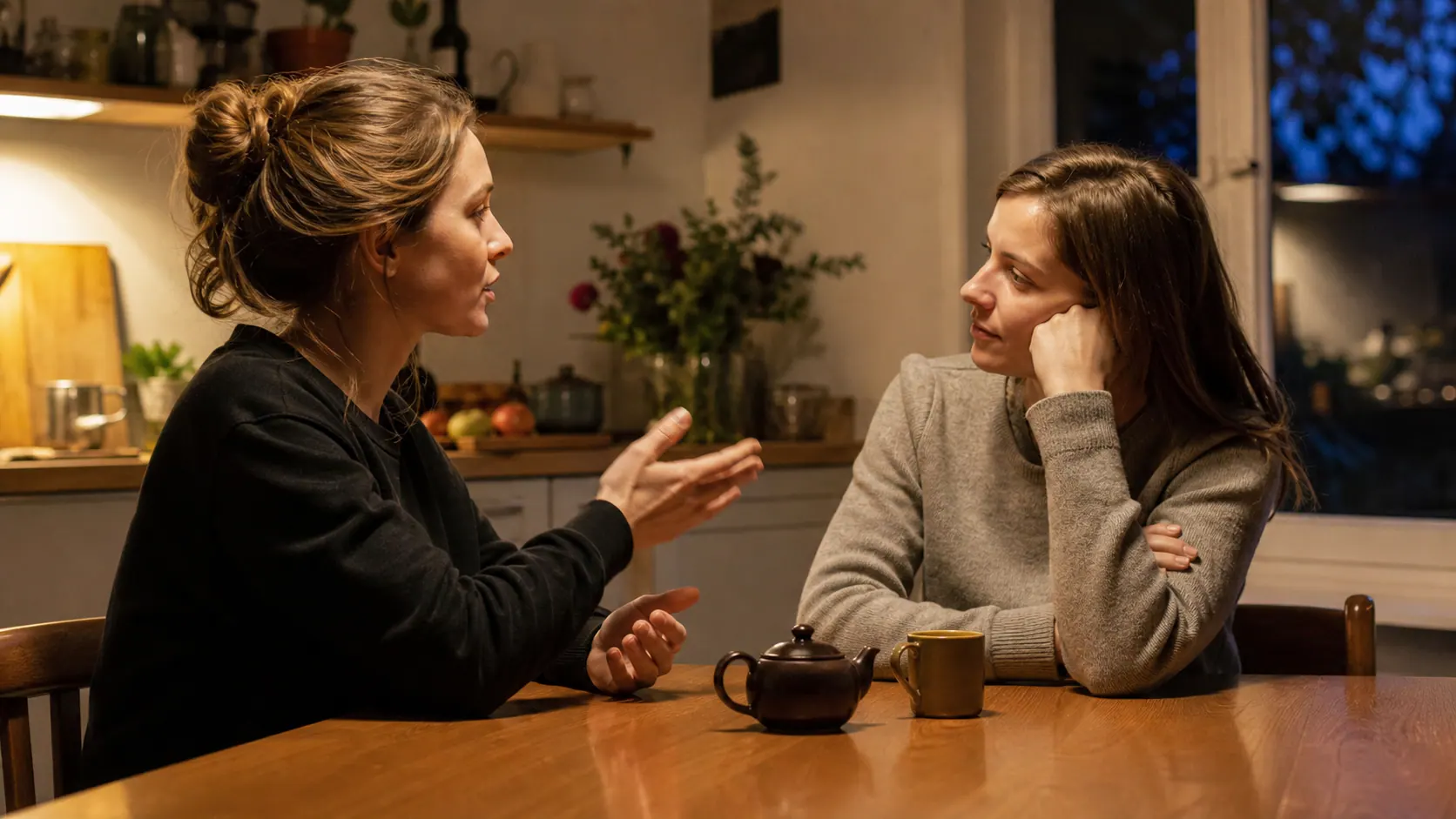
Many interviews are designed as extraction: obtain a revelation, a conflict or a sentence that can travel on social media. On Being, hosted by Krista Tippett, works at a different tempo. Its conversations use philosophy, spirituality, science and lived experience to explore how people make meaning.
The podcast is valuable even when a guest’s worldview is not your own, because it demonstrates a craft that has become scarce: asking a question spacious enough for a person to think rather than recite.
Questions shape answers
A narrow question often produces defence or performance. A question grounded in biography, tension or genuine curiosity can reveal how an idea was formed.
The host’s preparation is audible, but it does not crowd out the guest.
Listening is active
Silence, follow-up and returning to an unfinished phrase are forms of work. They signal that the conversation is not simply waiting for the next prompt.
Listeners can notice when their own urge to agree or object prevents them hearing the structure of an experience.
Depth is not vagueness
Slow conversation can still test claims. The strongest episodes connect abstract language to choices, relationships and institutions.
Warmth should not mean abandoning evidence or avoiding power.
How to use an episode
Choose a guest or subject you would not normally seek. Listen without multitasking for the first twenty minutes, then write down one question that stayed open.
In a family or team, discuss the question rather than trying to summarise the whole episode.
Why this format matters
Public discourse cannot run only on cross-examination and instant certainty. Some problems require language to develop while people are speaking.
On Being is a reminder that curiosity is not passivity. A carefully made question can expose assumptions, lower performance and create room for a more honest answer.
Sources and further reading: On Being podcast; On Being on Apple Podcasts.