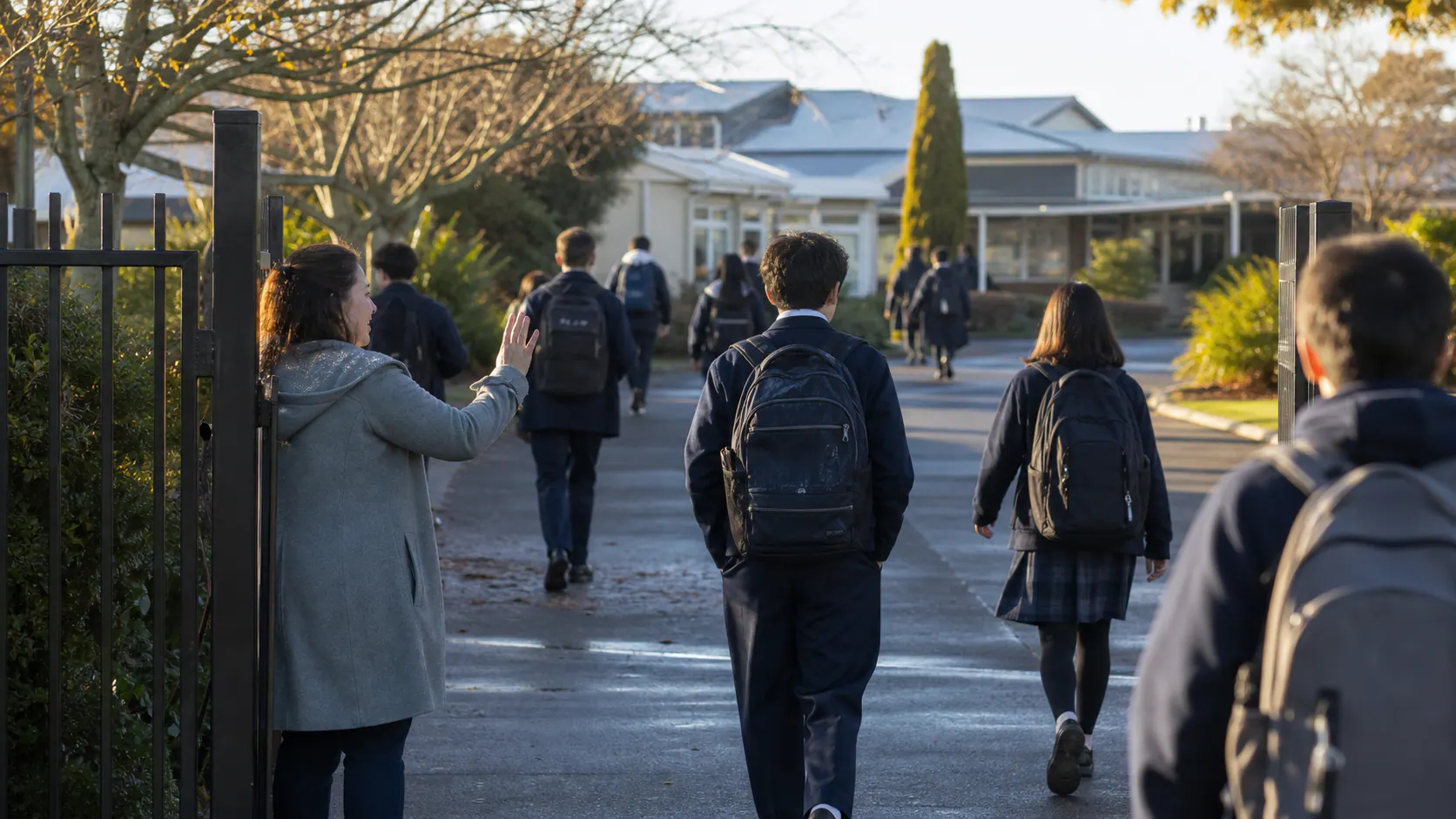
At 8.45 on a winter morning, school attendance looks simple: a gate, a bell and a student either present or absent. By the end of a term, however, that binary has become a map of respiratory illness, family transport, housing instability, disengagement, anxiety, cultural connection and the capacity of schools to notice trouble early.
Education Counts reports that 68.8% of students attended more than 90% of Term 1 in 2026, up 2.9 percentage points from the same term in 2025. The improvement matters. It is also not a reason to flatten every absence into the same story.
The headline measure is useful, but blunt
“Regular attendance” means being present for more than 90% of available half-days. A student can therefore miss close to one day a fortnight and remain near the boundary; another with a serious short illness may fall below it despite being engaged. The measure is a warning light, not a diagnosis.
The data also show short-term illness and medical reasons were the largest source of absence in Term 1. Unjustified absence declined, but justified days still interrupt learning. A punitive response cannot cure influenza, shorten a specialist wait or stabilise a family moving between temporary homes.
Absence accumulates quietly
One missed lesson is usually recoverable. Repeated absence creates gaps that make the next lesson harder, which can produce embarrassment and further avoidance. In practical subjects, group work and assessment sequences, “catching up” is not a worksheet; it requires teacher time and a student willing to reveal what they do not understand.
Attendance is therefore both an input and an outcome. Students come when they feel safe, expected and able to participate. They also build belonging by coming. Once that loop weakens, a letter reporting a percentage may arrive after the underlying relationship has already frayed.
Daily data should enable earlier help
Since 2025, schools have been required to submit electronic attendance data daily. Faster information can help identify patterns before they become chronic, but only if it reaches people who can act. A dashboard does not drive a child to school or make a classroom feel manageable.
Useful early intervention asks specific questions: Is absence clustered on particular days or subjects? Is transport unreliable? Is bullying involved? Does a health condition need accommodation? Are parents receiving messages in a language they understand? The answers determine whether the right response is pastoral, clinical, logistical or disciplinary.
Equity must be visible
National improvement can coexist with widening gaps between schools and communities. Equity-index, regional, age and ethnicity breakdowns matter because the resources required to improve attendance are not evenly distributed. A school with a counsellor, attendance officer and strong transport links has more options than a small school carrying the same work through already stretched teachers.
Accountability should examine what systems offered before blaming a family for refusing it. That does not remove parental responsibility or the expectation that children attend. It makes the expectation credible by matching it with practical support and a fair process.
What success should look like
The next milestone is not only a higher national percentage. It is fewer students in chronic absence, shorter time between the first pattern and a useful response, and evidence that returning students are reintegrated academically rather than merely marked present.
New Zealand should celebrate the 2026 improvement while resisting a victory-lap narrative. Attendance is a daily expression of whether education is accessible, trusted and worth returning to. The students behind the remaining 31.2% deserve a question more serious than “Why were you away?” They deserve “What would make tomorrow possible?”