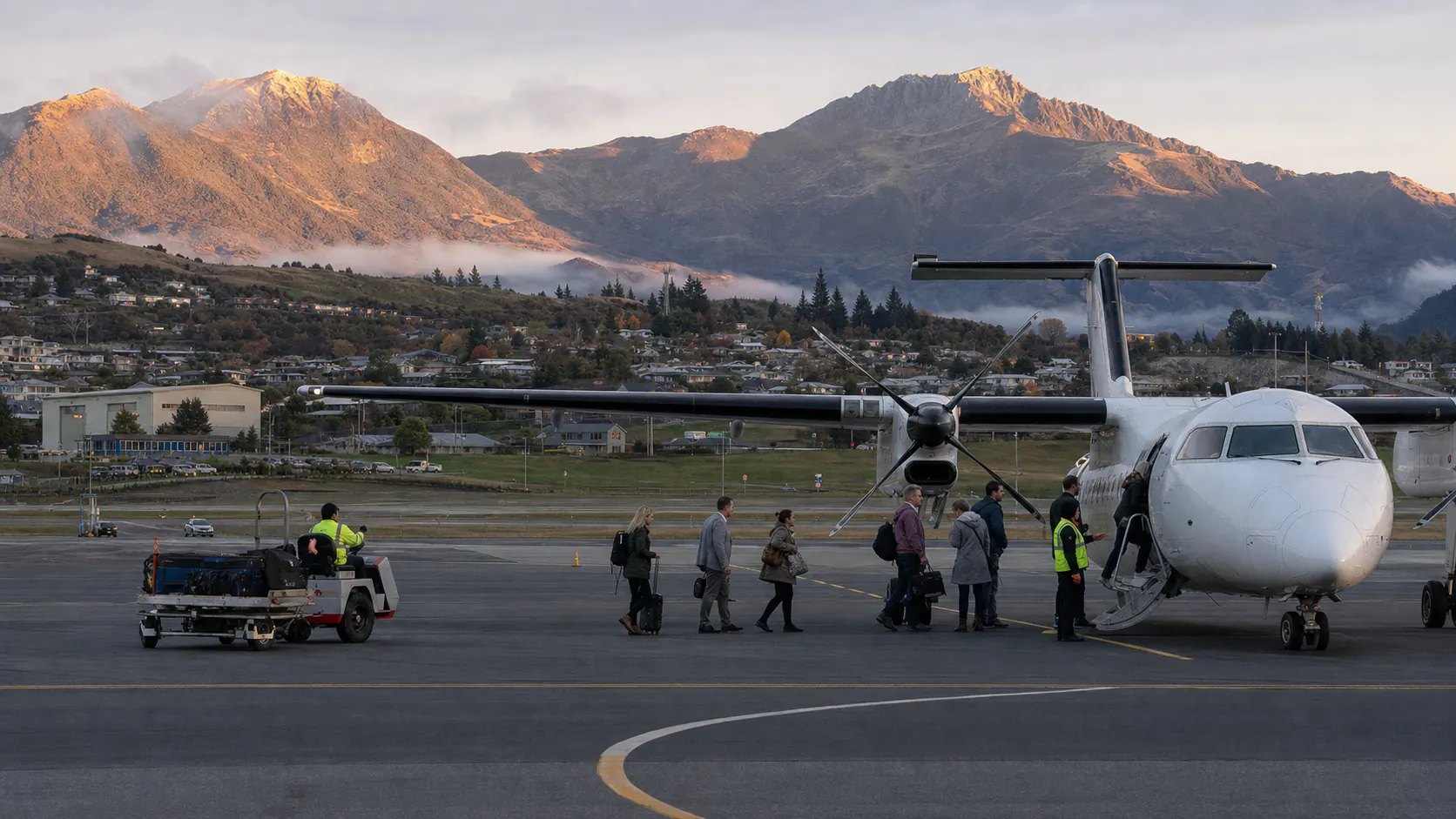
At a regional airport, a cancellation is rarely just a later holiday. It can mean a missed specialist appointment, a lost day of work, a student unable to reach home or a visiting professional deciding that a town is too difficult to serve. The aircraft may be small, but the network effect is large.
Regional aviation has airline economics: aircraft, crew, maintenance, fuel and regulation create high fixed costs, while each route depends on a limited pool of passengers. Calling a service essential does not make its timetable commercially viable.
Connectivity has several values
Passenger numbers capture tickets sold, not the value of time saved or services enabled. Health access, emergency movement, business productivity and social connection should be part of route assessment.
The alternative is also important. Some regions have reliable roads or rail; others face long, weather-exposed journeys. Public value differs by place.
Airports and routes are separate risks
Councils may own airports, while airlines decide schedules. A terminal upgrade cannot guarantee service, and a route subsidy cannot fix a runway or navigation constraint. Plans need to identify which layer is failing.
Charges must recover costs without making thin routes impossible. Transparent long-term asset plans help airlines and communities understand the bargain.
Reliability is part of access
A nominal daily flight is less useful if weather, crew shortages or lack of spare aircraft create frequent cancellations. Performance reporting should include completion, rebooking time and seasonal reliability.
Resilience may require schedule slack and backup arrangements that reduce short-term efficiency.
Decarbonisation changes the fleet question
Short routes are often presented as candidates for electric or low-emissions aircraft. The technology is promising, but certification, payload, weather reserves, charging and fleet availability determine real deployment.
Communities should avoid basing near-term connectivity on aircraft that are not yet operationally proven, while preparing infrastructure where evidence supports it.
If support is public, conditions should be public
Targeted support may be justified where benefits exceed fare revenue. Contracts should specify frequency, reliability, pricing transparency, accessibility and data reporting, with periodic review.
Subsidy should not become an indefinite blank cheque or disappear after a single weak season.
A network, not a prestige service
Regional aviation policy should start with the journeys people need, then compare air with road, rail, telehealth and coordinated ground transport. Sometimes the best investment will not be a flight.
Where air is the only realistic high-speed link, treating it as ordinary discretionary travel understates its role. The task is to combine public-value clarity with honest airline economics.