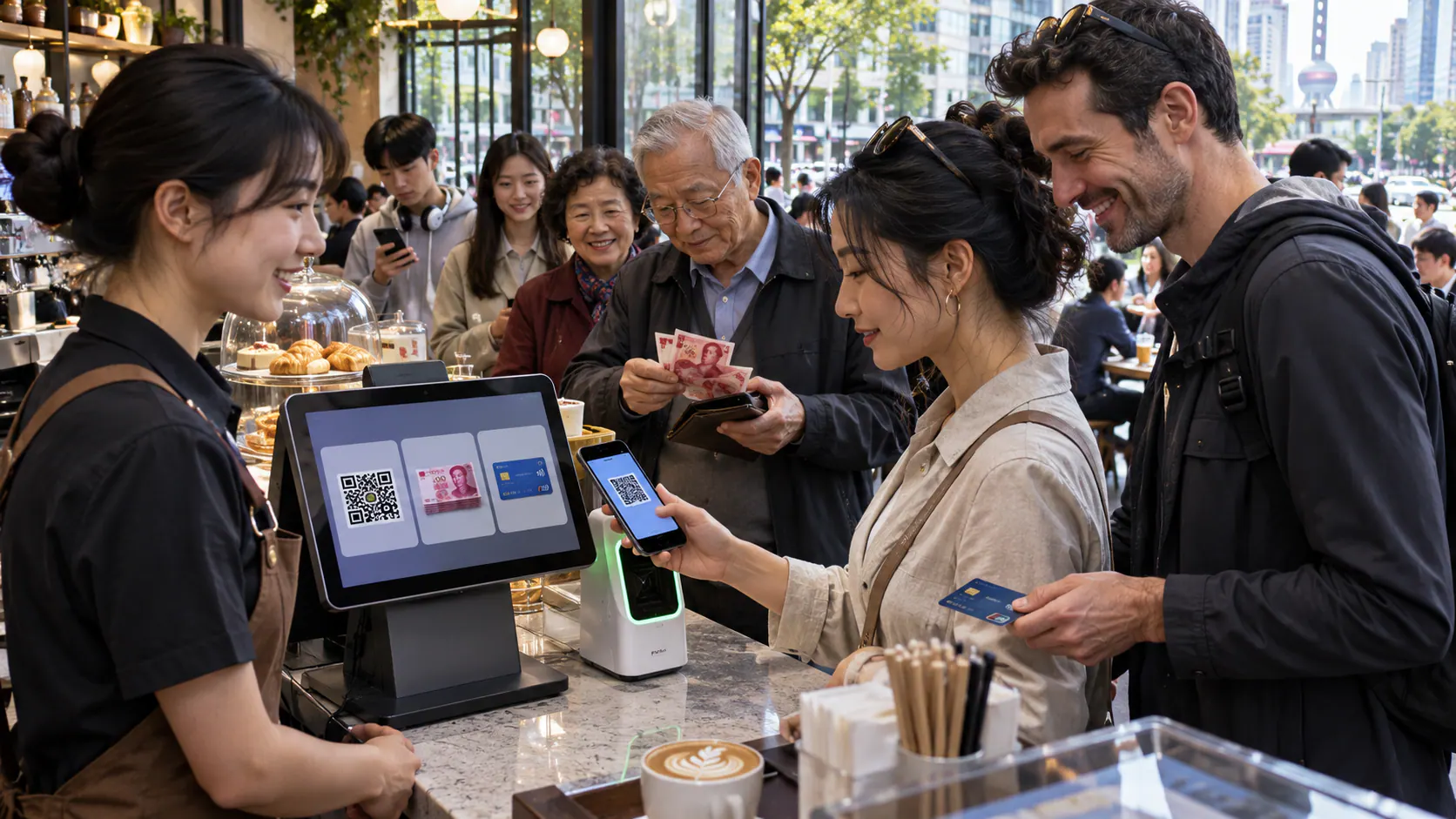
China’s QR-payment ecosystem made tiny transactions fast and cheap at a scale few countries matched. The achievement is real. So is the friction experienced by a visitor without a local account, an older customer facing authentication, or anyone whose battery, signal or risk controls fail at the counter.
Recent official efforts promote overseas bank-card acceptance, cash “change purses” and multilingual guidance. That policy recognises a basic design principle: a dominant technology becomes public infrastructure, and public infrastructure needs dependable alternatives.
Two payment systems can coexist
Digital payments reduce friction, but cash and cards provide resilience when networks, batteries, identity checks or unfamiliar apps fail. Redundancy is not inefficiency when the service is essential.
Design the whole journey
A payment is not complete at the tap. Registration, authentication, receipts, refunds, disputes and account recovery determine whether the system is genuinely usable.
Measure failed transactions
Authorities and providers should publish acceptance rates, complaint resolution and support times across user groups. Success data alone conceal exclusion.
Keep human help available
A trained person can resolve language, disability and fraud-control problems that no simplified screen can anticipate. Human support should be part of the service, not a favour.
Merchants need support
Small businesses should not carry every cost of cash handling, foreign-card terminals and staff training. Banks, platforms and regulators can supply low-cost tools and consistent guidance.
Fraud controls need an exit
Risk systems can block unusual transactions for good reasons, but users need an understandable explanation and rapid review. A protection that cannot be appealed becomes another form of exclusion.
Visitors reveal hidden assumptions
Tourists expose dependencies that residents no longer notice: local phone numbers, language, identity checks and app familiarity. Fixing those assumptions also helps domestic users in exceptional circumstances.
Optionality protects the achievement
The goal is not to reverse mobile payment. It is to make the system robust enough that QR, card and cash are real choices. Convenience becomes more credible when nobody is stranded by the most convenient method.