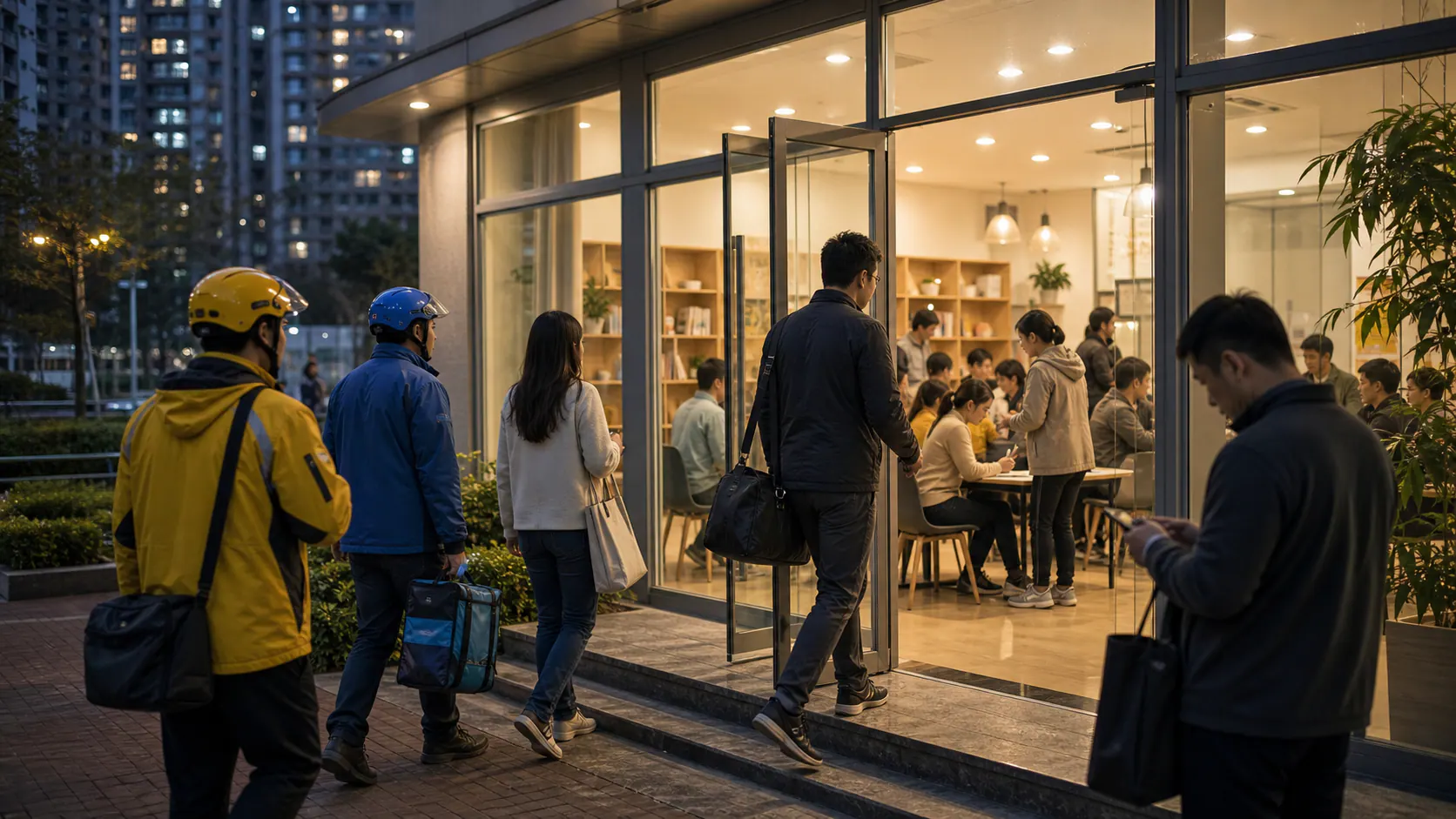
A membership number can look like a political statistic. China’s latest figure is also a map of social change. China Daily reported that the Communist Party of China had nearly 101.29 million members at the end of 2025, up by about 1.01 million from the previous year. The report also noted growth among new employment groups, including couriers, ride-hailing drivers and livestream workers.
That last detail is the key. The story is not only that the party remains large. It is that party organisation is trying to follow the labour market into places where work has become fragmented, platform-mediated and less attached to a traditional work unit.
Why the number matters
One hundred and one million members is a scale larger than the population of many countries. It gives the party a presence across state institutions, companies, villages, universities, neighbourhoods and social organisations. In China, that organisational reach is not separate from governance. It is one of the ways policy, mobilisation, discipline and local problem-solving are carried into daily life.
But the raw total can obscure the harder question: where are members located, and what kinds of social spaces does the party most want to organise now?
The work-unit model has changed
For much of modern Chinese governance, workplaces were key organisational anchors. State-owned enterprises, public institutions and formal employers made it easier to connect individuals to party branches, unions, residential systems and welfare structures. The platform economy complicates that.
A courier may work for a contractor, wear the colours of a platform, rent a room far from home and move across districts all day. A ride-hailing driver may be technically independent but algorithmically managed. A livestream worker may operate through agencies, studios or individual accounts. These workers are economically important but institutionally harder to reach.
That is why party-building among new employment groups is politically meaningful. It is a response to the weakening of older organisational containers.
What organisation can do
At its most practical, organisation can connect workers to services: rest stations, legal help, dispute mediation, traffic safety education, community support, training or emergency assistance. Chinese cities have experimented with courier rest stops, service centres and neighbourhood-level outreach. Party branches can become part of that network.
At its most political, organisation also brings visibility and discipline. It creates channels for messaging, mobilisation, grievance collection and social management. In a platform economy where workers can be isolated but numerous, that matters. The state wants to understand and shape these groups before they become sources of unmanaged conflict.
The worker question
The important test is whether organisation improves workers’ lives or mainly improves state visibility. Platform workers face familiar pressures: long hours, uncertain income, traffic risk, customer ratings, algorithmic penalties, insurance gaps and weak bargaining power. If party-building helps connect them to protections and services, it may have tangible value. If it only adds another layer of meetings and messaging, workers may experience it as administrative theatre.
This is the central tension. New employment groups are not just a governance frontier. They are workers with material problems. Any serious organisational strategy has to engage with pay, safety, social insurance, dispute resolution and human dignity in algorithmic work.
Why this matters beyond China
Every country is trying to understand platform labour. The difference is institutional style. In liberal market systems, the debate often moves through courts, unions, regulators and labour law reform. In China, the party-state also tries to build organisational presence inside the social spaces created by platforms.
That approach may give the state more information and reach. It may also blur the line between support and control. For outside observers, the important point is not to treat the membership number as abstract propaganda. It is evidence of an adaptive governance strategy: when work moves, organisation follows.
What to watch next
Three questions will show whether this strategy matters. First, do new employment group members gain stronger labour protections or only symbolic inclusion? Second, do platform companies face more pressure to cooperate with local party and social-service structures? Third, do workers use these channels to express grievances, or are the channels mainly top-down?
China’s party membership total is large. The more revealing story is where the newest organisational effort is going. Couriers, drivers and livestream workers show that the party is not only counting members. It is trying to keep governance attached to a labour market that no longer sits neatly inside old institutions.
Sources: China Daily on CPC membership data, Xinhua on the CPC anniversary event and China State Council English site.