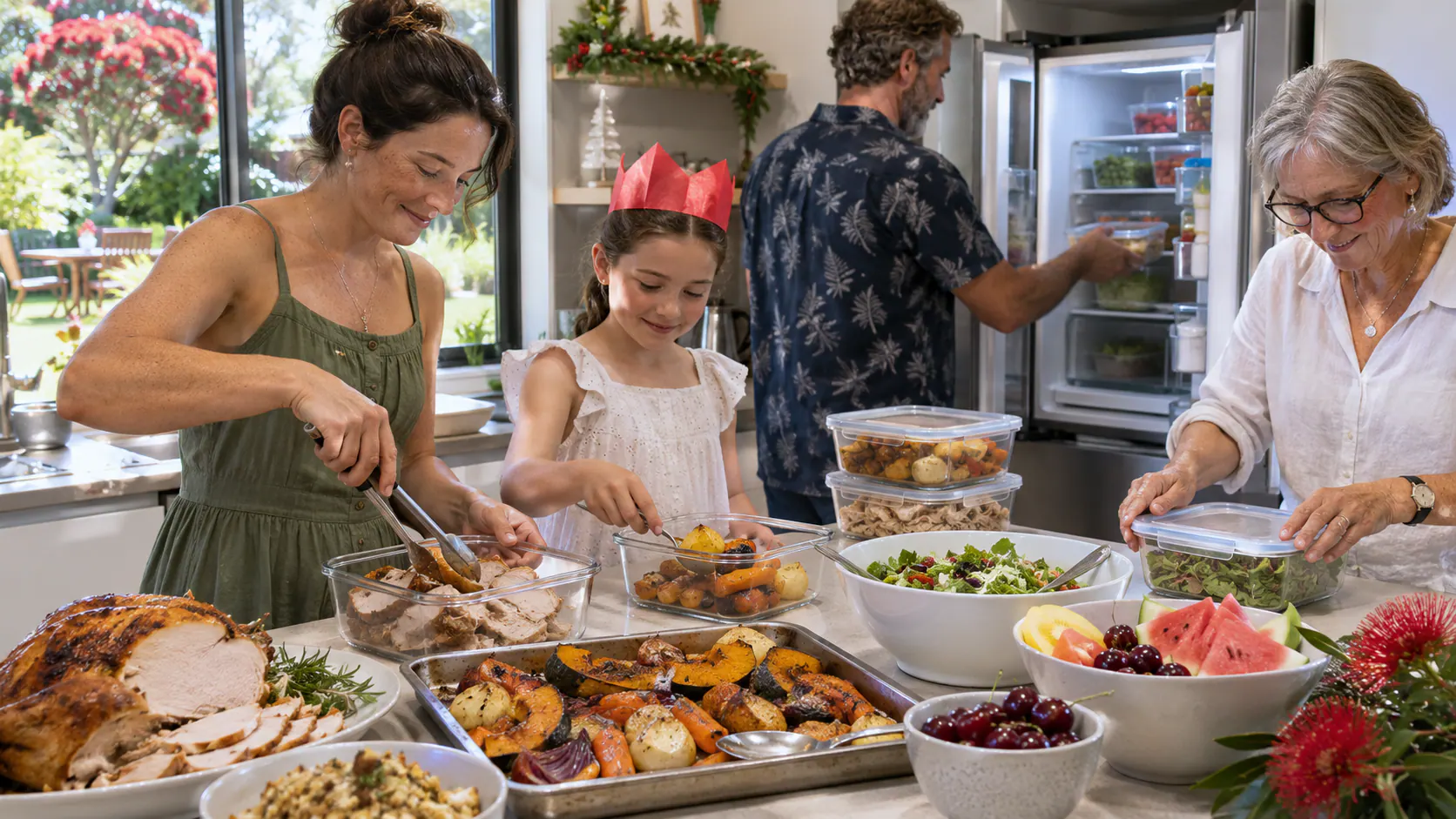
A generous Christmas table is not the same thing as an oversized shopping list. The difference appears after lunch, when warm food sits out, containers run out, guests decline another serving and the refrigerator is already full. Waste prevention works best when it is designed before cooking begins.
New Zealand’s first national baseline estimated about 1.22 million tonnes of food loss and waste each year, with households responsible for roughly 30 percent. The estimate combines data from different years and contains gaps, so it should be read as a system-level baseline rather than a precise count of one holiday. It still makes the central point clear: household decisions matter, but farms, processors and retailers also shape waste.
Plan by eaters, not tradition
Ask who is actually attending, what they enjoy and what other dishes are coming. A smaller version of a favourite dish is more generous than a large tray eaten only out of obligation.
Make refrigerator space first
Two days before the meal, use fragile produce and clear one shelf for cooling containers. A crowded refrigerator cools slowly and hides food until it is forgotten. Label containers with the food and date.
Serve in rounds
Keep part of cold food refrigerated and replenish smaller platters. This protects quality and avoids leaving the entire meal at room temperature while people talk. Follow New Zealand food-safety advice for cooling and storage.
Design dishes for a second life
Roast vegetables can become frittata or salad; meat can be sliced for sandwiches; fruit can be frozen for smoothies. The second use should be decided while shopping, not improvised after everyone is tired.
Send food home safely
Have clean containers ready and tell guests what needs refrigeration. Avoid gifting leftovers that have already spent too long warm. People should be free to decline without guilt.
Freezing is a decision, not a delay
Freeze portions while they are still in good condition, in quantities that will genuinely be used. A freezer full of unidentified food is waste postponed.
Compost is useful but comes later
Avoiding surplus preserves all the energy, land and labour used to produce food. Redistribution and feeding people come before composting; local collection rules determine what can enter council organics services.
Keep the feast, change the system
The aim is not a joyless calculation of every potato. It is a meal where abundance means care, not disposal. A short guest list, a storage plan and one deliberate leftovers dinner can preserve both hospitality and value.
Sources and further reading
- Ministry for the Environment: Baseline Food Loss and Waste Report
- Ministry for the Environment: Reducing food waste
- Ministry for the Environment: National food waste reduction programme