A river sampled on the same calm morning each month may look stable while carrying its largest sediment, pathogen and nutrient loads during a few storm hours. Those pulses matter for ecosystems, swimming, drinking-water treatment and the estuary downstream.
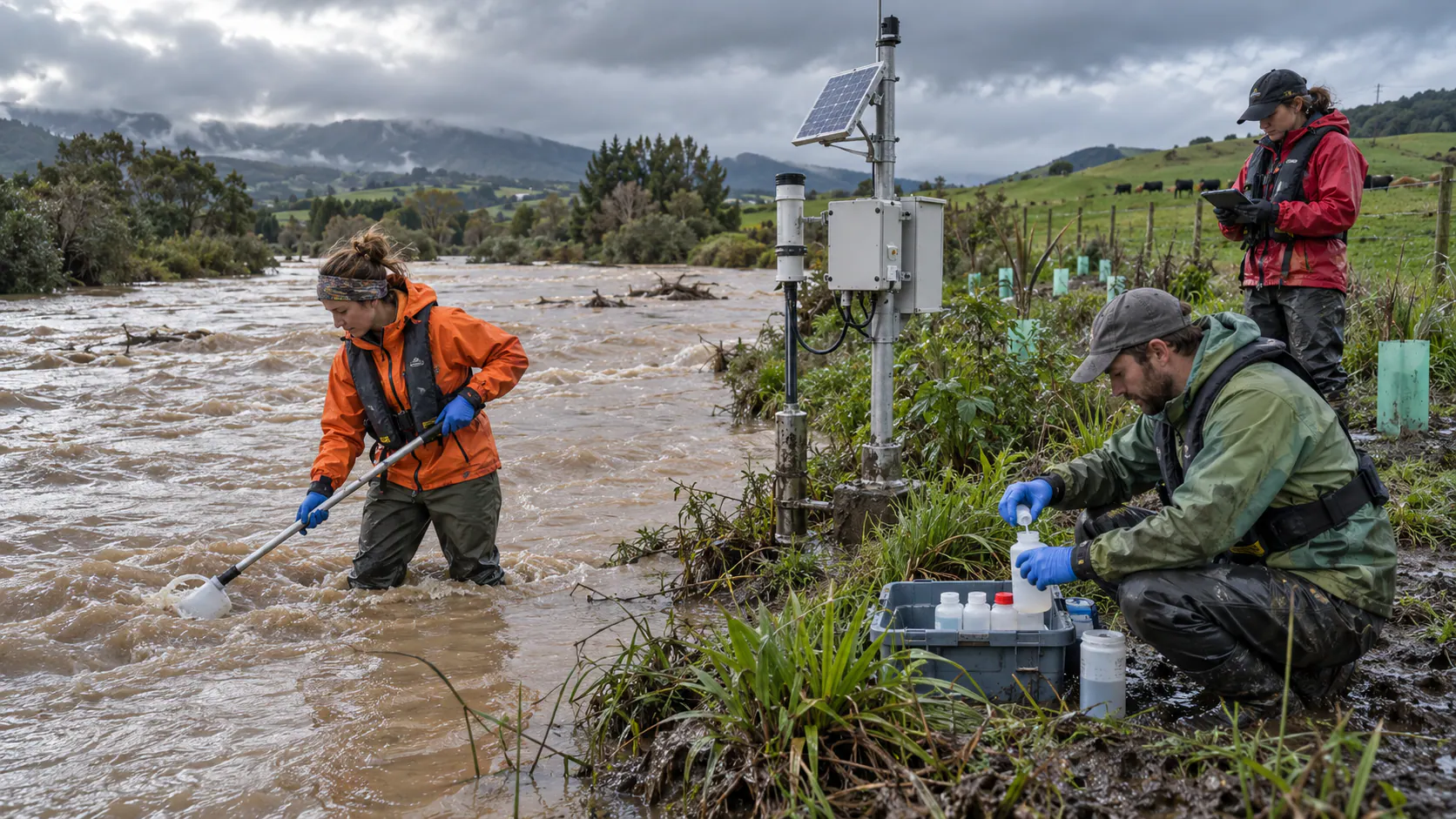
Our Freshwater 2026 identifies extreme events as important transport windows that routine programmes can miss. Closing that gap is not as simple as sending staff into dangerous floodwater; it requires sensors, automated samplers and designs that connect event data to long records.
Why storms change the chemistry
Rain mobilises manure, soil, road residue and material stored in drains or channels. Concentrations and total loads can change quickly as flow rises and falls.
Continuous sensors help but do not measure everything
Turbidity, conductivity and water level provide high-frequency signals. Laboratory samples remain necessary to calibrate proxies and identify pathogens, nutrients or emerging contaminants.
Sampling must follow the hydrograph
One bottle at peak flow cannot describe the event. Rising limb, peak and recession samples reveal different sources and transport processes.
Safety comes first
Remote triggers and fixed equipment reduce exposure. No dataset justifies wading into unstable, debris-filled water. Field plans need thresholds, communications and stop rules.
Data should serve warnings and policy
Near-real-time information can support closures and treatment decisions, while long-term analysis tests land and stormwater interventions. These uses require different quality controls.
Costs should be targeted
Not every site needs identical equipment. Catchment risk, downstream users, land use and existing gaps should guide investment.
Report uncertainty honestly
Sensor drift, missed samples and changing rating curves are normal technical problems. Publishing them makes evidence stronger, not weaker.
See the whole catchment
Storm monitoring shows connections that administrative boundaries obscure. A credible programme follows contaminants from hillslope and street to aquifer, river and coast.