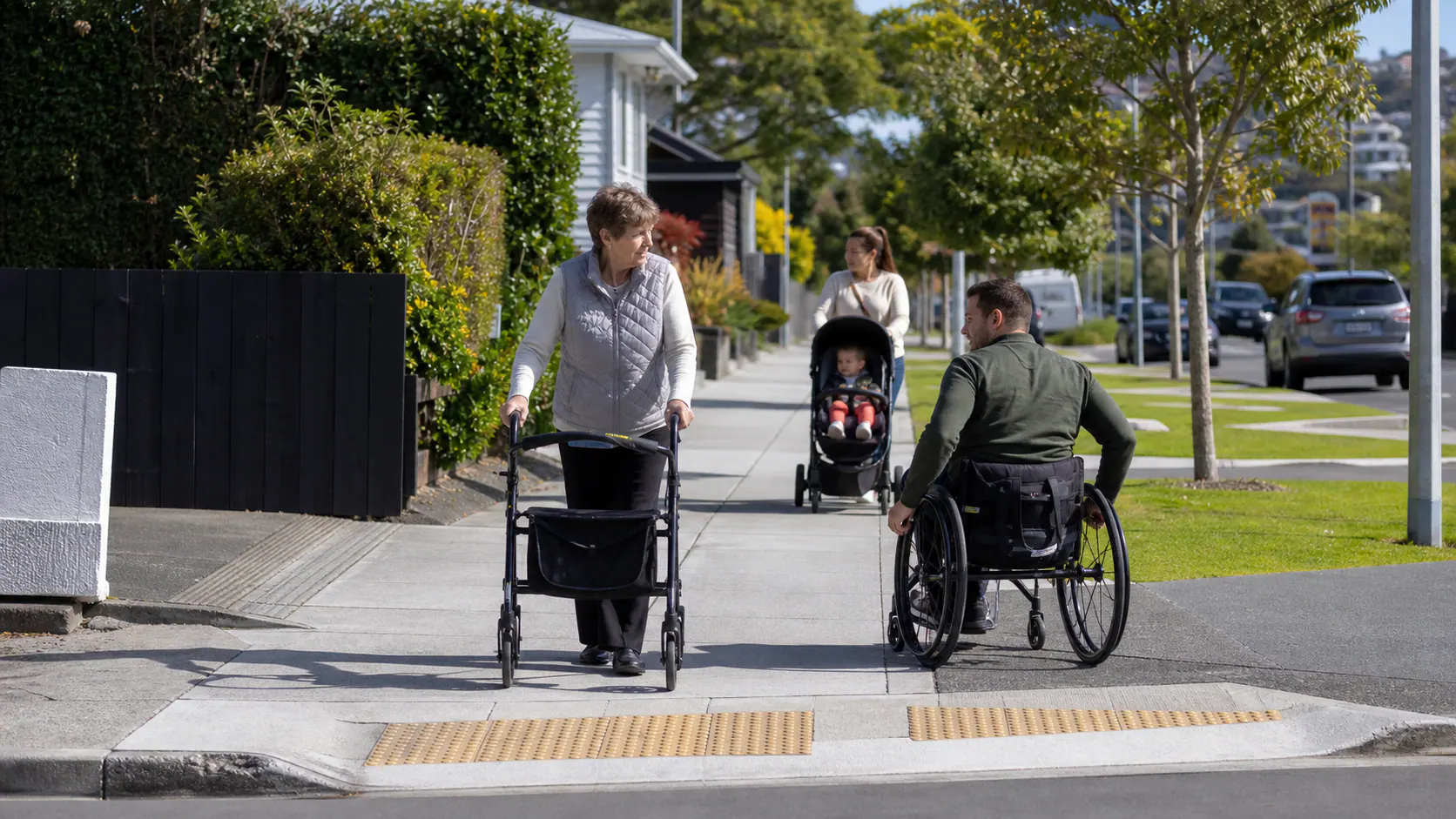
A footpath can be mostly good and still be unusable. One steep driveway, broken slab, overgrown hedge or missing kerb ramp can end a journey for a wheelchair user, an older person with a walker, a parent pushing a pram or someone with low vision.
New Zealand should manage footpaths as continuous mobility networks, with service standards that measure whether people can complete routes to shops, schools, bus stops and health services. Counting kilometres of pavement is not enough.
Continuity matters more than averages
An average width hides pinch points. A network map can show a route while ignoring a crossing that lacks tactile cues or a construction site that sends pedestrians into traffic.
Audits should follow complete journeys and include users with different mobility needs.
Driveways are repeated intersections
Every driveway interrupts pedestrian priority through slope, vehicle movement and surface changes. Designs that preserve a level footpath make the hierarchy clearer.
Busy commercial crossings need sightlines and speeds that recognise the footpath continues across them.
Maintenance is accessibility policy
Tree roots, ponding, loose gravel and vegetation develop gradually. Complaint-only systems favour people with time and confidence to report hazards.
Councils need proactive inspections, published repair priorities and rapid treatment of dangerous defects.
Temporary works need real routes
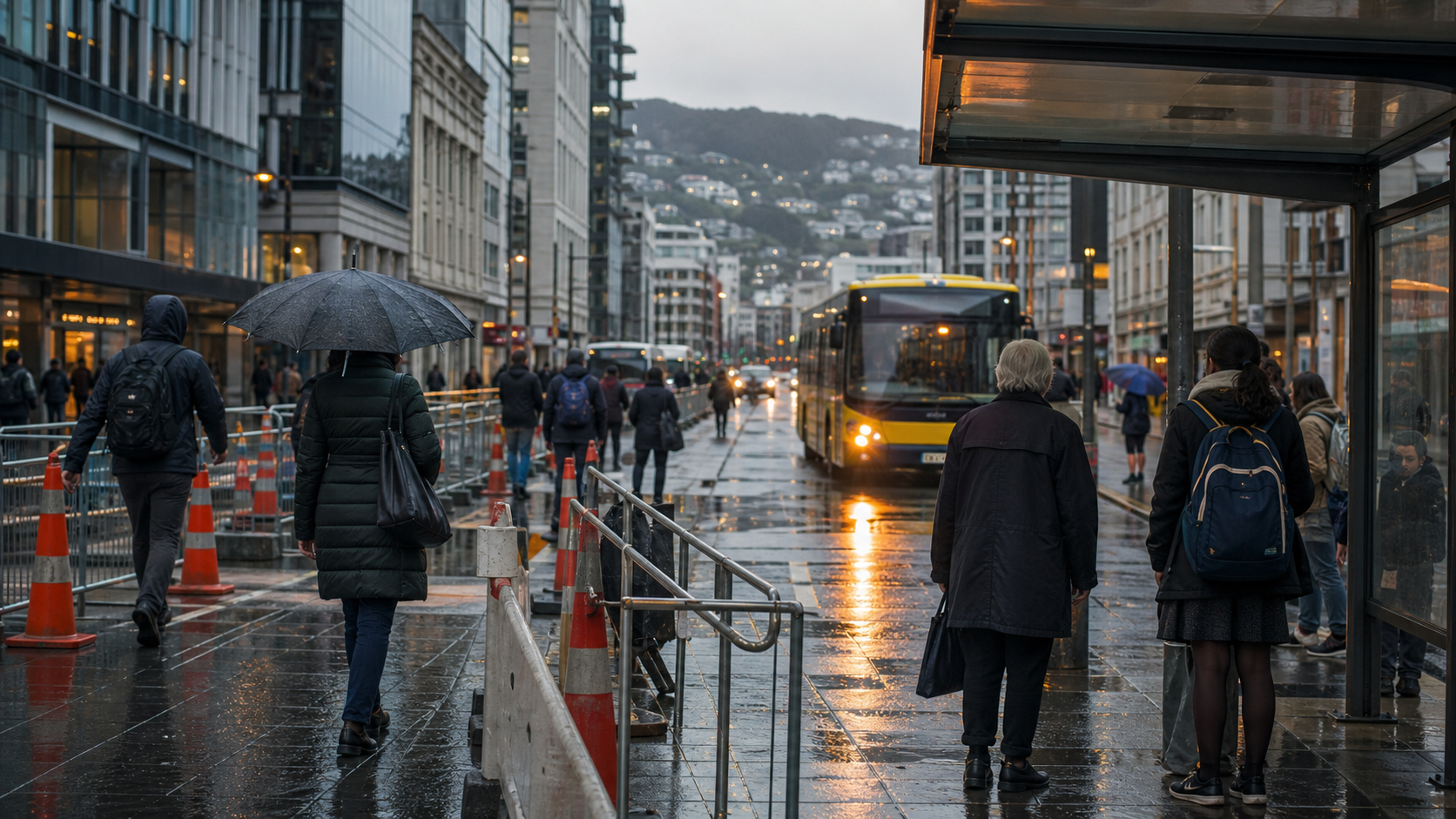
A sign saying ‘use other footpath’ may require two unsafe road crossings. Temporary paths should have usable width, ramps, protection and clear directions.
Contractors should be accountable for pedestrian access throughout a project, not only at completion.
Data should reflect lived access
Asset databases can record material and condition, but co-designed audits reveal fear, effort and missing links. Disabled people should be paid for specialist input.
Public dashboards could show closures, accessibility features, repair times and priority corridors.
Walking is a transport mode
Footpaths support public transport, local business, health and independence. They deserve stable maintenance funding rather than leftover budgets after roads.
The standard should be simple: an ordinary trip should not depend on lifting a mobility device, stepping into traffic or knowing a secret alternative route. A continuous footpath network is basic freedom of movement.