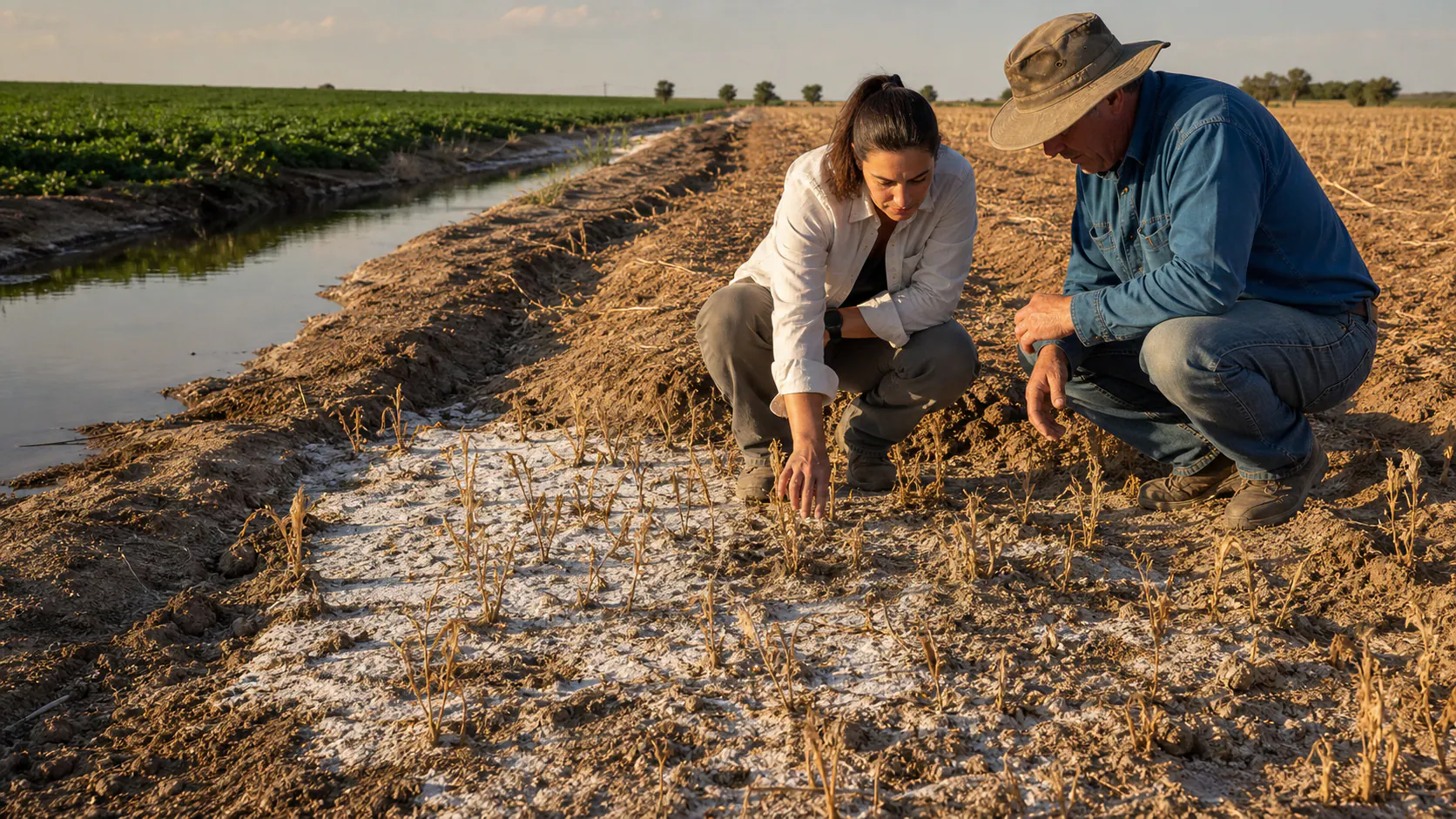
Salt can arrive without a dramatic disaster. Irrigation water evaporates and leaves minerals behind. Groundwater rises. Coastal water moves inland. Plants become patchy, yields decline and farmers apply more water, sometimes accelerating the problem.
The Food and Agriculture Organization’s 2024 global assessment says salt-affected soils cover more than 1.38 billion hectares, around 10.7 percent of global land. The scale matters, but management begins field by field, with soil data and an honest water balance.
Saline and sodic are not identical
Saline soils contain high soluble salts. Sodic soils have excessive exchangeable sodium that can damage soil structure and water movement. A field can experience both.
Treatment depends on diagnosis. Washing salts without drainage may simply move the problem or raise groundwater.
Irrigation carries a hidden balance sheet
All irrigation water contains some dissolved salts. Where evaporation is high, plants take water while salts remain. Adequate leaching and drainage are therefore part of irrigation design.
Efficiency should not be measured only by water delivered. It must include where salts and drainage water go.
Climate change adds pressure
Hotter, drier conditions increase evaporation and water demand. Sea-level rise and storm surges can push salinity into coastal soils and aquifers.
Drought responses that rely on increasingly saline groundwater may protect one season while harming future productivity.
Measurement capacity is uneven
Electrical conductivity, soil profiles, groundwater depth and irrigation-water quality reveal different parts of the problem. Farmers need affordable testing and advice that translates results into choices.
Comparable national data also helps direct drainage, research and extension investment.
Salt-tolerant crops are one tool
Breeding and halophytes can maintain production in some conditions, but they do not repair every soil or justify unlimited salt accumulation.
Crop choice should be combined with drainage, soil amendments where appropriate, better scheduling and source-water management.
The economics decide whether recovery lasts
Drainage infrastructure and soil rehabilitation can be expensive, while benefits arrive slowly. Small farmers may abandon land or take on debt before recovery.
Policy should fund shared drainage, monitoring and technical support, and avoid rewarding water use that externalises salinity downstream. Soil becomes visibly white only late in the story; governance must notice it earlier.