Emergency departments are designed for uncertainty. People arrive with pain, fear, unclear symptoms and changing risk. The system’s job is to sort urgency quickly enough that deterioration is caught before it becomes irreversible. When a patient dies after waiting, the question is not only what happened in that case. It is what long waits do to the safety margin for everyone else.
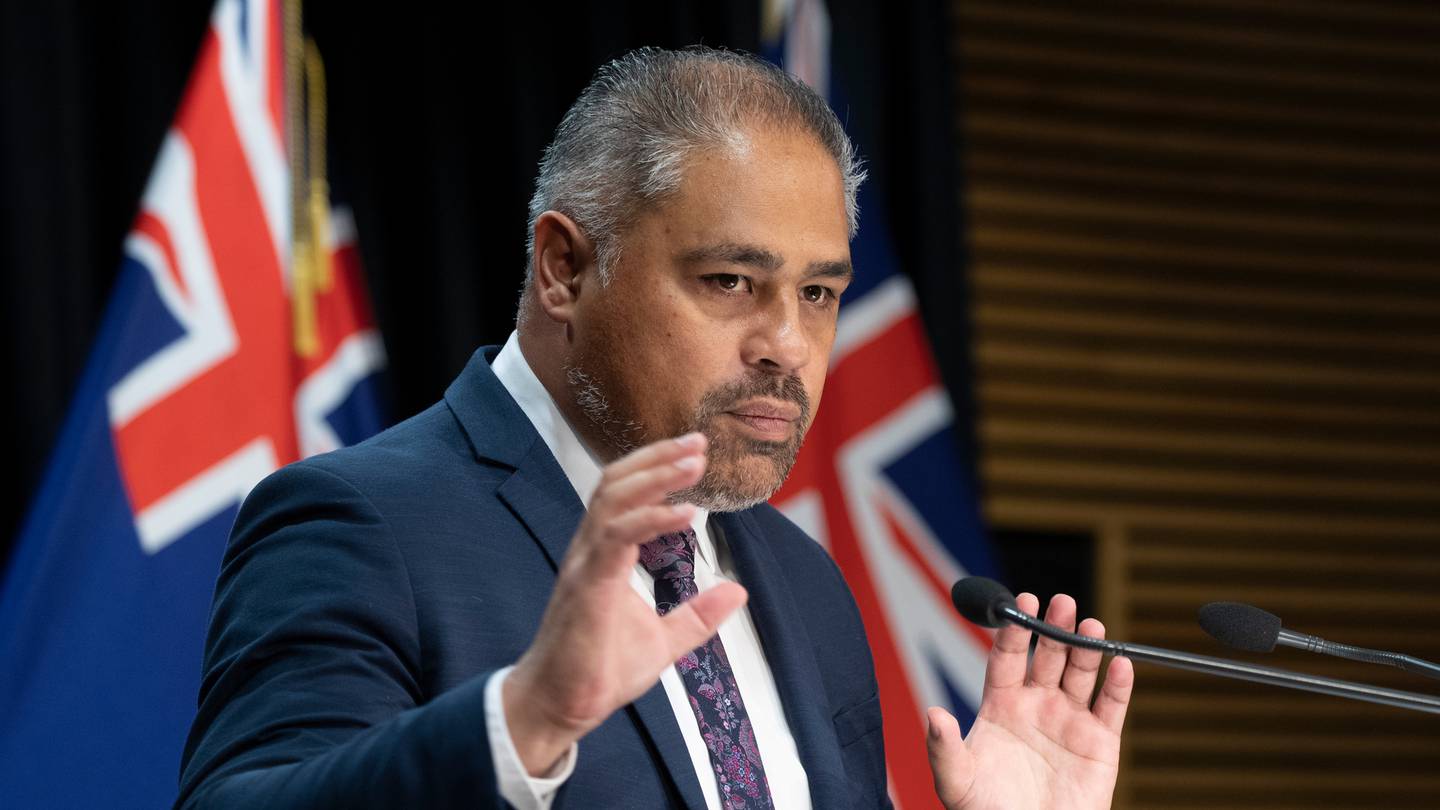
1News reported that a man in his 50s died after waiting in the Waikato Hospital emergency department, and Health New Zealand confirmed two reviews are under way. Regional leadership acknowledged the man waited longer than expected and said some patients can wait up to 24 hours in emergency departments. Those details are stark because they point beyond one hospital.
Why ED waits become dangerous
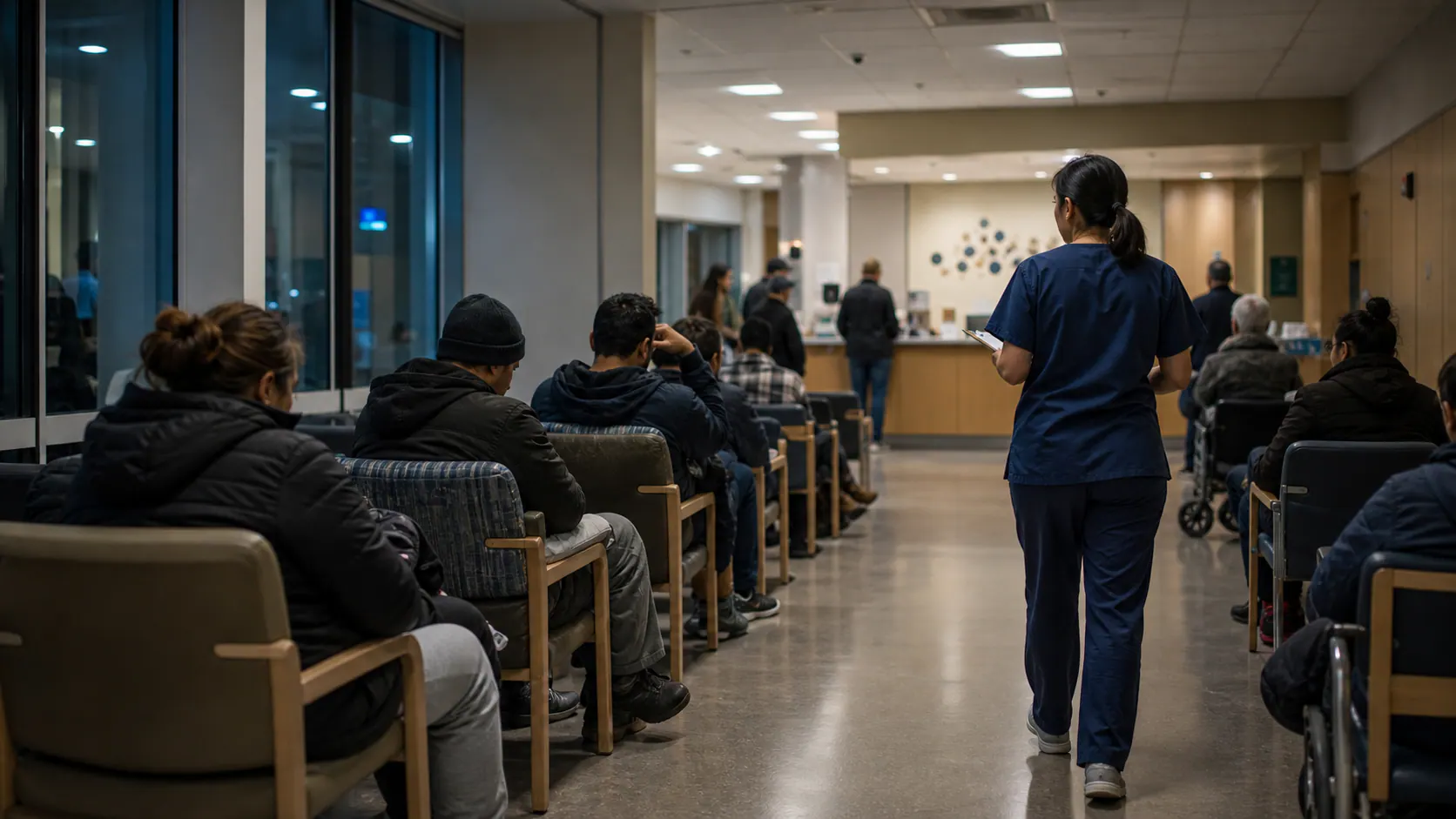
A waiting room is not a neutral place. Symptoms change. Pain increases. A person who looked stable at triage may become unstable. A patient may understate symptoms, lose consciousness, leave before being seen, or deteriorate quietly while staff are dealing with more visibly urgent cases.
Triage is essential, but it is not magic. It depends on information available at one point in time. Long waits stretch the interval between assessments. That is why safe ED systems need reassessment, escalation pathways, staffing, beds and flow into wards. The problem is rarely only at the front door.
The hidden issue: hospital flow
Emergency departments often become crowded because patients cannot move out of them. If wards are full, ED cubicles stay occupied. If discharge is delayed because community care, aged-care beds or home supports are not available, the pressure moves backwards. Ambulances queue. Waiting rooms fill. Staff spend more time managing congestion and less time giving care.
This is why ED wait times are a whole-system signal. They reflect primary care access, after-hours services, ambulance pressure, hospital bed capacity, workforce shortages, discharge planning and social support. Treating the ED as an isolated department misses the chain.
What reviews need to answer
A serious review should not stop at whether staff followed the rules. It should ask whether the rules were safe under the conditions staff faced. Key questions include:
- How long did the patient wait at each stage?
- How often was he reassessed?
- Were warning signs missed, unavailable or not acted on?
- How crowded was the ED at the time?
- Were there enough staff for the patient load?
- Were inpatient beds available?
- Did wider hospital flow contribute to the delay?
Families deserve answers about individual care. The public deserves answers about system risk.
The workforce dimension
Long waits also harm staff. Clinicians know when the system is running too close to the edge. They carry moral distress when they cannot give the care they believe is needed. Burnout then worsens staffing, creating a loop. A system that normalises extreme waits quietly transfers risk to patients and emotional cost to workers.
Public debate sometimes frames ED pressure as a problem of people attending unnecessarily. There are inappropriate presentations, but that explanation can become too convenient. Many people use ED because primary care is unavailable, unaffordable, closed, or unable to provide urgent diagnostics. Others are correctly worried. The system cannot rely on patients perfectly self-sorting before they seek help.
What should change
First, Health New Zealand should publish clear wait-time and crowding data in a form the public can understand. Average waits are not enough; the tail matters. How many people wait extremely long periods? Which groups are most affected? What happens overnight?
Second, hospitals need reliable reassessment protocols for waiting patients. A person who has waited many hours is not the same patient who arrived. Risk changes over time.
Third, the system must invest in flow beyond ED: ward beds, discharge support, after-hours care, community diagnostics and aged-care capacity. ED crowding is often where failure becomes visible, not where it begins.
The trust test
People go to emergency departments when they believe they cannot safely wait elsewhere. If the waiting room itself becomes a place of uncertain risk, public trust changes. Families begin to feel they must advocate aggressively to be seen. Staff become defensive. Patients may delay seeking care because they expect an ordeal.
The Waikato review should therefore be treated as more than a local incident. It is a warning about the safety margin in New Zealand’s urgent care system. A humane health system does not promise that every outcome can be saved. It does promise that waiting itself will not become an unmanaged danger.
Sources: 1News on the Waikato Hospital ED death review, Health New Zealand and Health Quality & Safety Commission.