Opinion: New Zealand is uncomfortable talking about when an older person should stop driving. That discomfort is understandable. A licence can mean independence, dignity, groceries, church, medical appointments and the ability to stay in one’s own home. But a 1News report on a fatal wrong-way motorway case involving suspected undiagnosed dementia forces a harder question: why do we still rely so heavily on families, doctors and chance to detect a public-safety risk that can be devastating when missed?
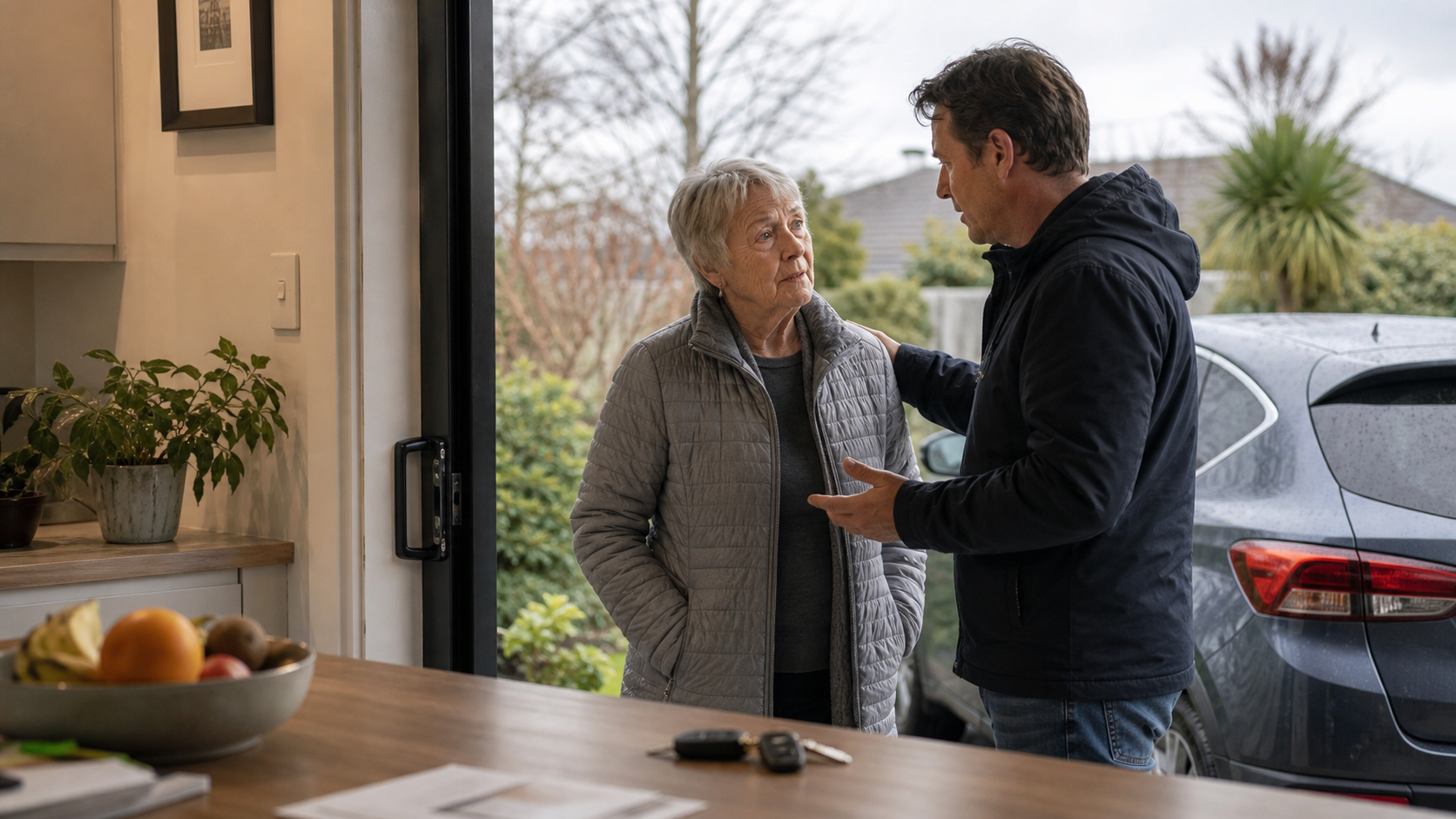
The thesis is simple: cognitive fitness to drive should be treated as a public system, not a private family confrontation. Families have a role, doctors have a role, and drivers have rights. But leaving the hardest moments to ad hoc conversations around a kitchen table is neither fair nor safe enough.
The best argument for caution
There is a strong argument against overreaction. Most older drivers are not dangerous. Age alone is a poor proxy for risk. Rural and suburban New Zealand often gives people few alternatives to driving. If the state makes licence renewal too blunt or humiliating, it can isolate people, worsen health outcomes and punish those who are still capable. Any system that treats older people as a problem to be removed from roads would be unjust.
That argument matters. It is why the answer cannot be a crude age cut-off or a panic-driven crackdown after one tragedy. Cognitive decline varies. Some people recognise changes early; others do not. Some families can intervene gently; others are divided, distant or frightened of conflict. A fair system needs nuance.
Why the current burden is too personal
The problem is that driving decisions often become emotionally loaded before they become administratively clear. Adult children may notice confusion, getting lost, near misses or unexplained dents. A partner may cover for decline because losing the car feels like losing normal life. A GP may see a patient for a short appointment and have limited evidence. Police may only become involved after an incident. By then, the risk may already have been visible to someone, but not converted into action.
NZTA provides information on medical requirements and older-driver licence renewal. Those rules are necessary, but the public conversation remains thin. Many families do not know what to document, who to contact, how medical fitness is assessed, or what transport support exists after a licence is limited or removed.
Doctors are placed in a difficult position as well. They must respect patients, assess medical risk and sometimes deliver news that changes a person’s daily life. A short appointment is not always enough to understand real-world driving behaviour. Families may bring concerns that are specific but emotionally charged. Patients may minimise problems because they fear losing independence. A better system would give clinicians clearer pathways and better access to functional assessments when warning signs appear.
A kinder system would be clearer
Kindness is not the opposite of firmness. A kinder system would explain earlier what warning signs matter, how concerns can be raised, and what happens next. It would give families language that is not accusatory. It would help GPs with evidence pathways. It would make restricted driving, occupational therapy assessments, refresher lessons, mobility planning and community transport part of the conversation before crisis.
It would also acknowledge grief. Giving up driving can feel like a public declaration of decline. People need alternatives, not only prohibition. If we want safer roads, we also need better ways for older people to reach shops, clinics, social groups and whanau without feeling abandoned.
Technology may help, but it cannot replace judgement. In-car alerts, navigation history and family location sharing can reveal patterns, yet they also raise privacy and dignity questions. The most humane approach is not surveillance by default. It is a graduated process where concerns can be raised, assessed and supported before the only choices are silence or sudden licence loss.
What should happen next
New Zealand should strengthen public guidance on cognitive fitness to drive, improve pathways for family concerns, and invest in practical mobility support for people who can no longer drive safely. The goal should not be to catch people out. It should be to reduce the number of families who have to choose between saying nothing and becoming the villain in a loved one’s life.
A more useful model would include earlier conversations at routine health checks, clearer public information for families, better access to driving assessments, and stronger links between licence decisions and transport alternatives. The moment someone loses the ability to drive safely should not also be the moment they lose access to community. If the state removes a risk, it should help build a substitute form of mobility.
There should also be better public language. “Taking away the keys” makes the issue sound like punishment. A safer framing is transition: moving from independent driving to supported mobility. That language may sound soft, but it matters. People are more likely to engage early when they do not feel they are being shamed.
Road safety is often discussed in terms of speed, alcohol, phones and infrastructure. Cognitive decline belongs in the same public-safety conversation, but with particular care. The state cannot remove all risk from roads. It can, however, make sure that when memory, judgement and orientation begin to fail, families are not left alone with the keys.
Sources: 1News on the wrong-way driving case、NZTA medical requirements for driving、NZTA older-driver licence renewal and Dementia New Zealand.