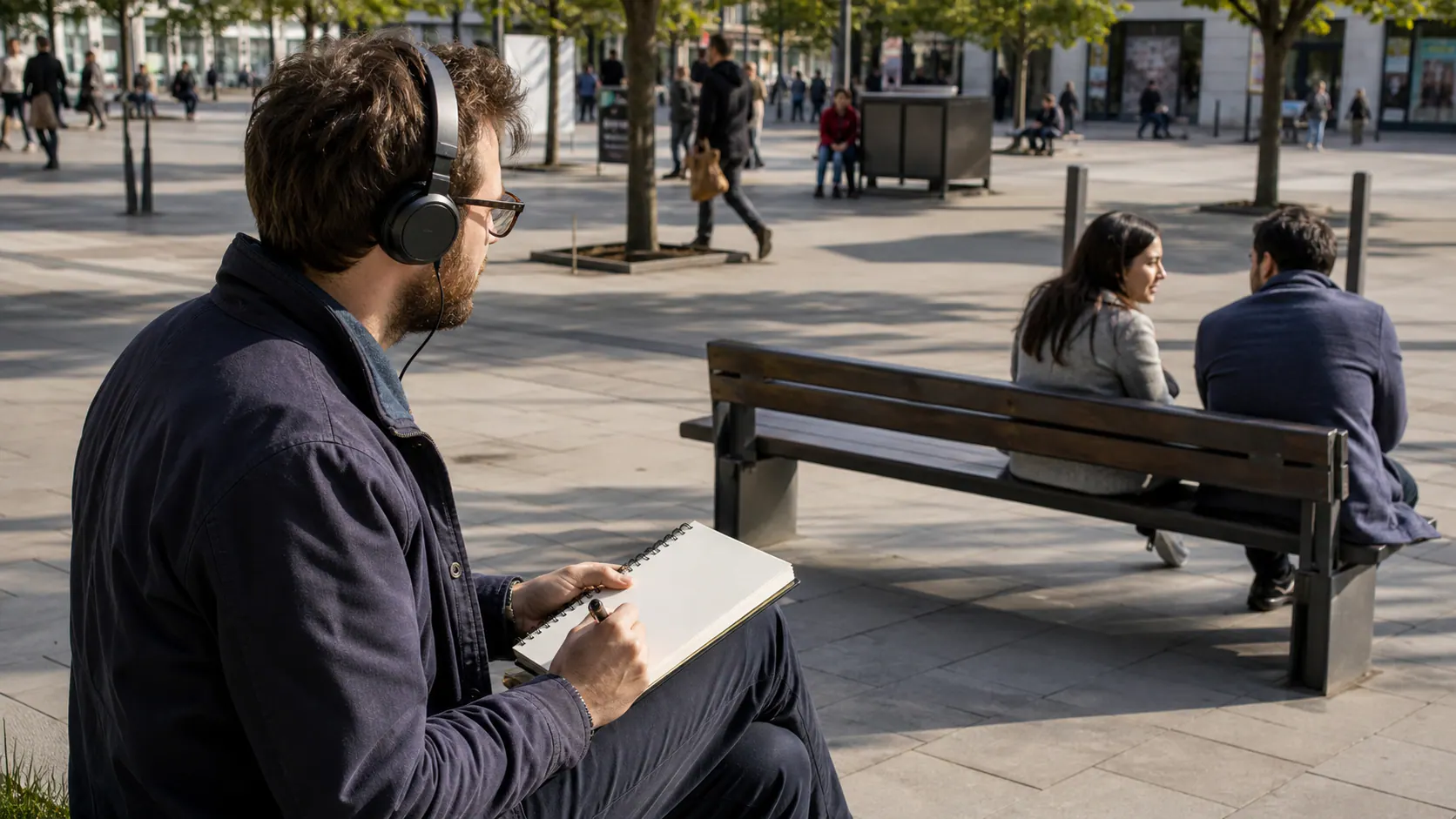
A divider in the middle of a bench can support an arm, organise seating and prevent someone from lying down. Design rarely announces which purpose mattered most. The 99% Invisible episode “Unpleasant Design & Hostile Urban Architecture” teaches listeners to read those quiet instructions.
The episode is from 2016, yet the framework remains useful because hostile design is often defended as neutral maintenance. Producer Kurt Kohlstedt and the programme examine how objects can deter behaviour without the negotiation possible with a person.
The bench is not failing
An uncomfortable seat may be highly successful if the brief was to limit time, sleep or particular users. Asking “successful for whom?” changes how design quality is judged.
Control becomes material
Spikes, slopes, segmented seats, sound and lighting make policy physical. Once installed, the rule operates continuously and is difficult for the affected person to challenge.
Not every armrest is hostile
Features can support older or disabled users. Context, alternatives, consultation and cumulative effect matter. The episode is best used as a question-generating tool, not a label machine.
Listen while walking
Afterwards, observe bus stops, ledges, toilets, shade and seating. Note who can pause, who must stand and whether an apparently public place offers a dignified way to remain.
Why it endures
The programme reveals that exclusion can be embedded without a sign. Once noticed, the city becomes legible as a sequence of choices rather than a neutral background.