An Ebola outbreak is never just a medical event. It is a test of surveillance, logistics, public trust, border coordination and the speed at which science can become protection on the ground.
ABC reported on 2 June that health authorities are watching an Ebola outbreak and vaccine response involving a rare strain, with attention on the Democratic Republic of Congo and Uganda. The headline is alarming, but the deeper question is structural: why does the world still struggle to move fast when the disease is already known, the danger is clear and vaccines may be available?
Science is only the first step
The modern Ebola story is not the same as the Ebola story of the 1990s. Diagnostics have improved. Public health playbooks are better. Vaccines exist for some strains. International response networks are more experienced.
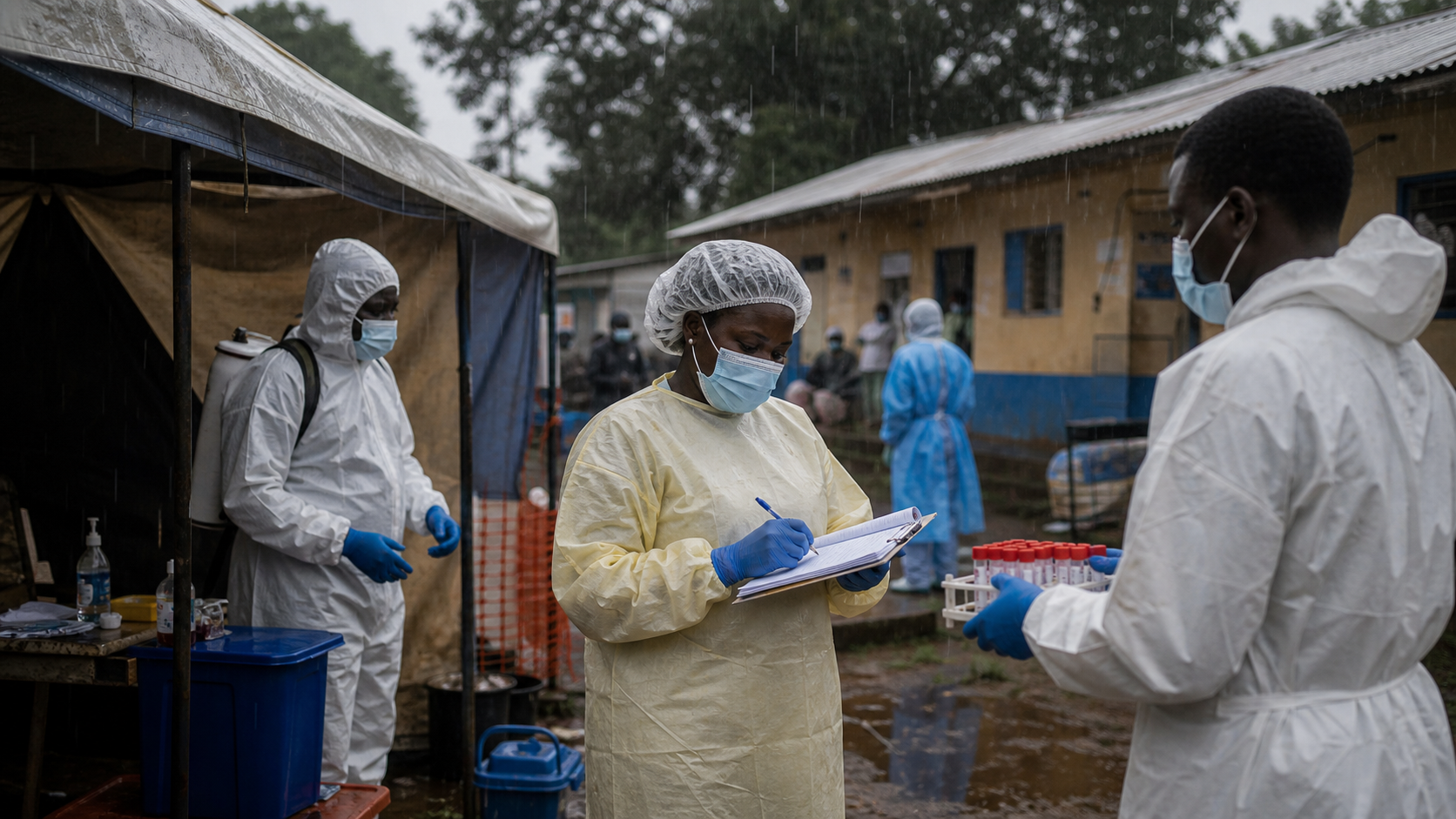
Yet every outbreak still faces the same practical barrier: health protection must happen in real places. Vaccines need cold chains. Clinics need staff. Communities need to trust the response. Suspected cases need to be identified quickly. Contacts need to be traced without creating panic or stigma.
Why rare strains complicate response
Ebola is not one uniform virus. Different species and strains raise different questions about vaccine match, treatment protocols and risk communication. A rare strain can slow decision-making because authorities must determine what tools are appropriate and how much evidence exists for each intervention.
That uncertainty matters because outbreak response is a race against exponential spread. Delay does not merely postpone control; it can create a larger problem to control.
The trust problem
Public health systems often talk about community trust as if it is a soft issue. It is not. Trust determines whether people report symptoms, accept vaccination, allow safe burials and cooperate with contact tracing.
In regions with histories of conflict, weak state services or past traumatic health campaigns, communities may be sceptical of outside responders. That scepticism can be rational. Public health teams must therefore act not only as medical providers but as listeners.
The global lesson
Ebola outbreaks tend to be treated as distant emergencies until they threaten wider spread. That is a mistake. The capability to detect and contain dangerous pathogens in one region is part of global security. Underfunded health systems are not local problems; they are weak links in a shared protective system.
The lesson is not simply “more vaccines”. It is vaccines plus surveillance, logistics, local health workers, transparent communication and long-term investment between outbreaks.
What to watch
- Case numbers and geography: whether transmission remains clustered or spreads across districts and borders.
- Vaccine availability: whether the vaccine platform matches the strain and can be deployed quickly.
- Health worker protection: infections among responders can signal deeper system stress.
- Community engagement: acceptance may determine the speed of containment as much as medical technology.
The world has learned a lot about Ebola. The question is whether it has learned how to move knowledge fast enough.