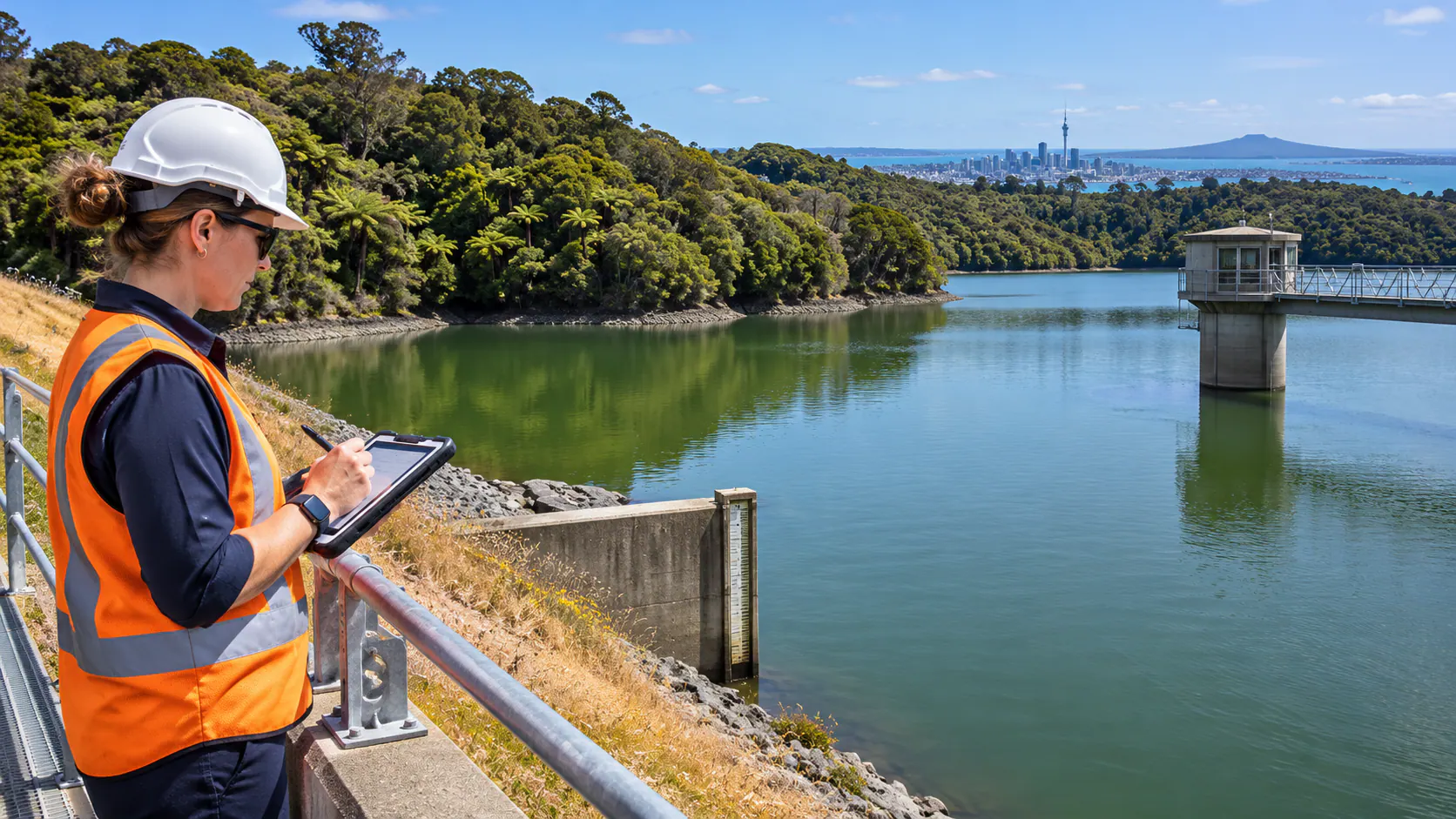
A full-looking reservoir can create false certainty. Water security depends not only on what is stored today, but on rainfall, demand, treatment capacity, river takes, network failures and how quickly a city acts when several indicators deteriorate together.
Watercare reported in August 2026 that Auckland’s storage was about 94 percent, almost ten percentage points above the historical average, making restrictions unlikely at that point. It also adopted an updated drought plan as El Niño raised the possibility of a drier summer. The important story is not alarm; it is preparation while conditions are favourable.
Storage is a snapshot
Dam percentages are easy to communicate, but they move with weather and demand. A resilient plan combines storage with forecasts, river flows, groundwater, treatment constraints and consumption trends.
Triggers reduce political delay
Published thresholds make it harder to postpone unpopular action until a shortage is obvious. They also let households and businesses understand what evidence moves the system from monitoring to voluntary savings and restrictions.
Demand management buys options
Leak repair, efficient fittings, industrial audits and clear garden guidance reduce pressure without asking people to stop normal life. Early, modest savings can preserve more disruptive options for genuinely severe conditions.
Alternative sources have trade-offs
River abstraction, groundwater and desalination differ in cost, energy and environmental impact. Diversity helps, but each source needs consent, maintenance and treatment capacity before a crisis.
Communication must stay specific
Telling people to “save water” indefinitely produces fatigue. Updates should state current storage, expected trend, requested actions, exemptions and the next decision point.
Equity belongs in restriction design
A household with a garden differs from a dialysis service, food business or crowded rental. Rules need clear essential-use provisions while avoiding loopholes that make conservation feel unfair.
Climate uncertainty rewards flexibility
No forecast can name every dry spell. Plans should be rehearsed, reviewed after each summer and able to escalate or relax without losing public trust.
Preparedness is the quiet success
If restrictions never arrive, planning was not wasted. The same monitoring, maintenance and communication improve everyday reliability. Water resilience is strongest when the public sees decisions before an emergency, not only after the dams fall.