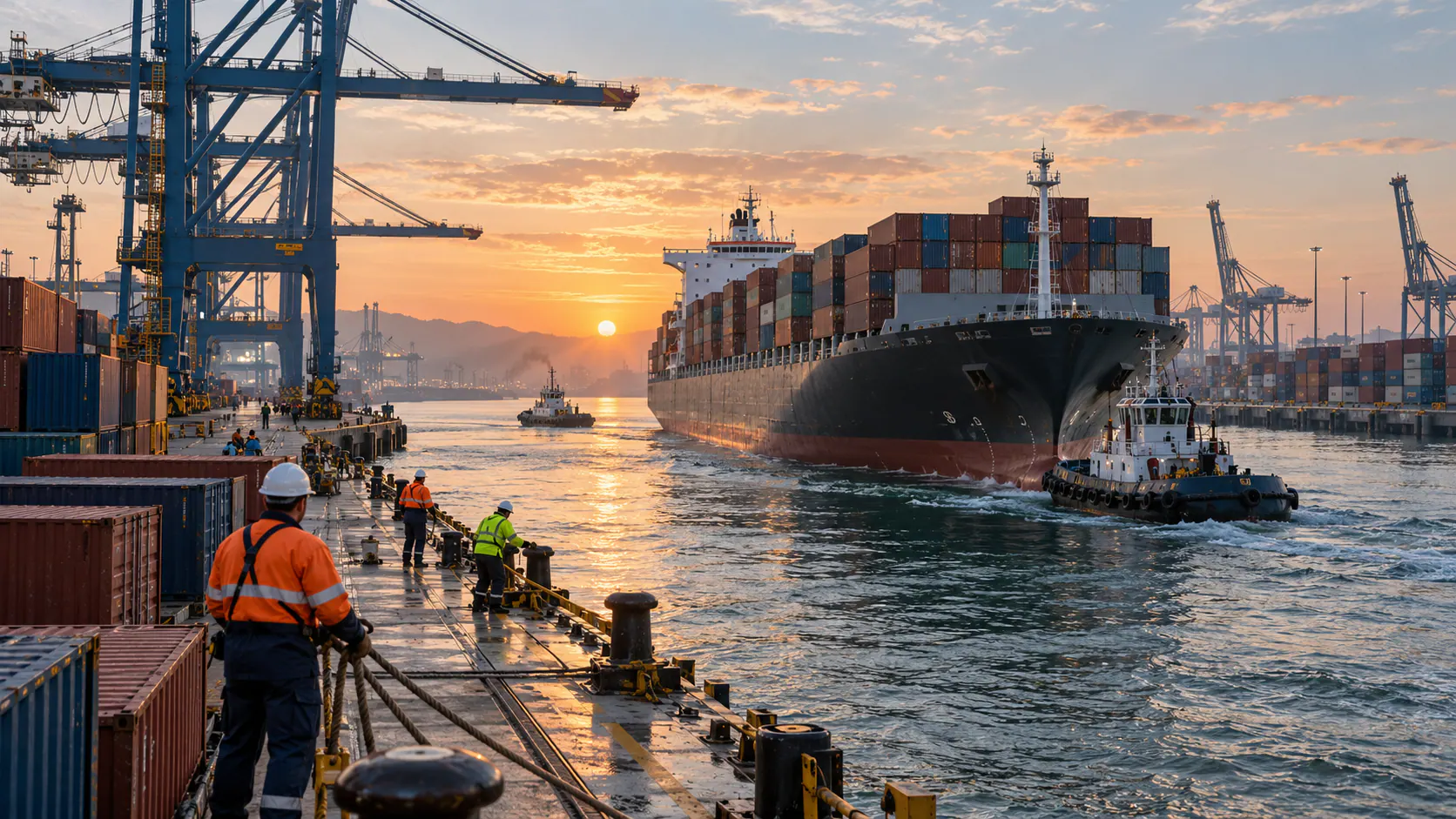
A container ship is enormous, yet ocean shipping works only because thousands of smaller decisions align: boxes arrive, cranes are available, berths turn over, trucks collect cargo and empty containers return to the right place.
Wendover Productions’ “How Ocean Shipping Works (And Why It’s Broken)” makes that coordination visible. Its strongest lesson is that high utilisation can look efficient until disruption removes the spare capacity that kept the network recoverable.
Containers standardised movement
The box reduced handling but shifted complexity into cranes, yards, chassis, customs and schedules.
Networks amplify delay
Late arrival can miss a berth window, crowd a yard and leave exporters without empties. Local problems propagate.
Imbalance is physical
Trade does not produce matching containers in every direction. Repositioning empty equipment costs time, fuel and space.
Efficiency removed buffers
Larger ships and tight schedules lower unit cost but concentrate risk. Resilience has a price that spreadsheets can hide.
Ports are land systems too
Rail, roads, labour and warehouse capacity determine whether a fast crane creates useful flow or a larger queue.
Watch with updated context
The video describes a particular disruption period. Its structural explanation remains useful, but current rates and conditions should be checked separately.
Why it rewards attention
The animation turns an opaque global system into linked constraints. After watching, “the port is congested” becomes the beginning of a question, not its answer.