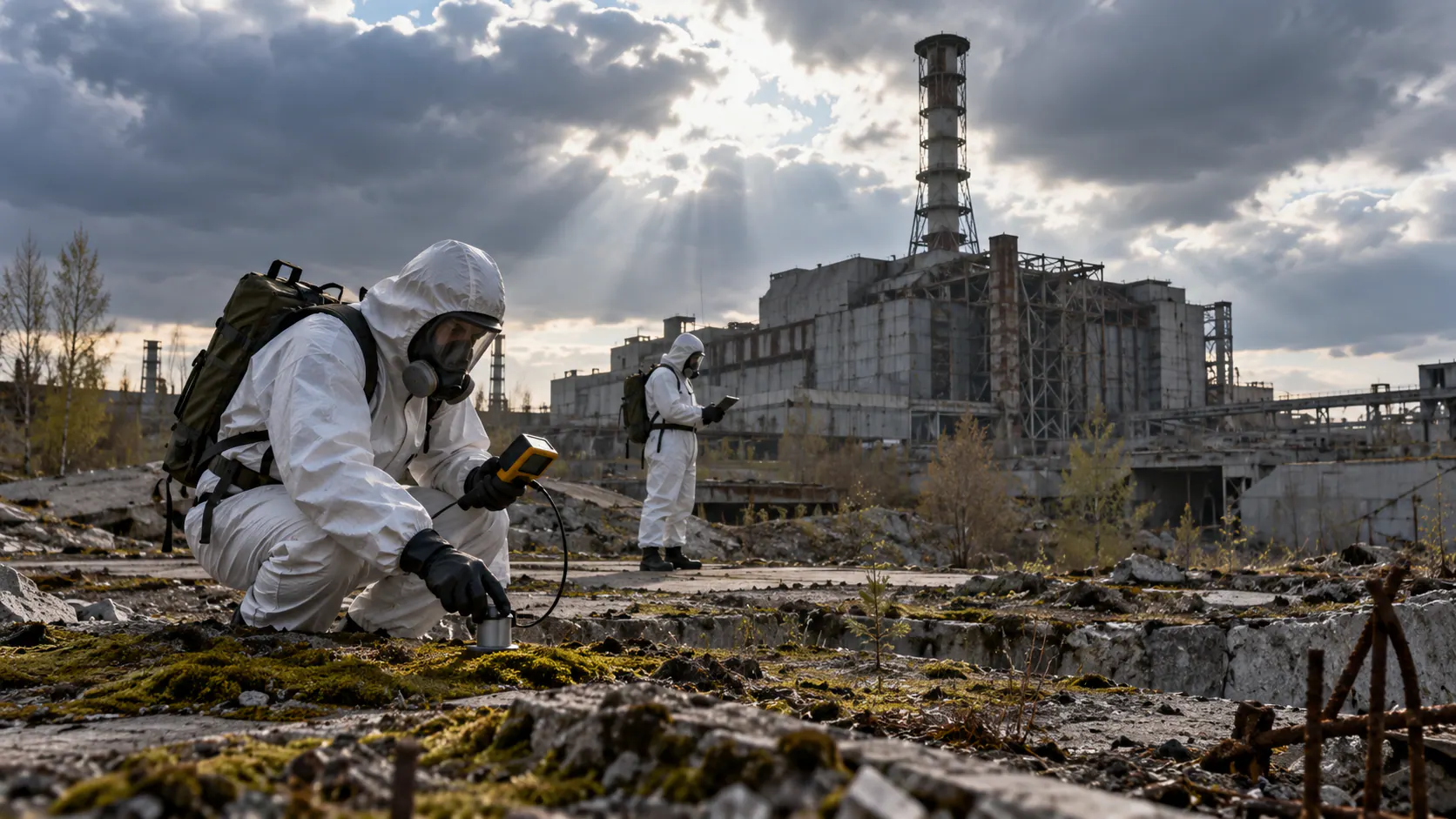
Radiation is unusually difficult to think about. It is invisible, measured in unfamiliar units and associated with both medicine and catastrophe. Veritasium’s “The Most Radioactive Places on Earth” builds a journey around that discomfort, carrying instruments into places that sound frightening and asking what the readings actually mean.
The episode works because location alone does not determine risk. Dose rate, time, distance, shielding and the route by which material enters the body all matter. A dramatic detector reading can be brief; a modest chronic exposure can be more consequential.
A meter is not a verdict
Different detectors respond to different radiation and energy ranges. A number without units, calibration and context can mislead. The video gives viewers a reason to ask what is being measured before deciding how afraid to be.
Hazard and risk are different
Radioactive material is a hazard; risk depends on exposure. This distinction does not make contamination harmless. It makes protection more precise by focusing on credible pathways and cumulative dose.
Natural does not mean safe
Background radiation varies with geology and altitude. Natural origin is not a guarantee of safety, just as an artificial source is not automatically catastrophic at every distance and duration.
The episode’s visual strength
Seeing the instrument, environment and presenter together makes an abstract quantity tangible. The travel structure also shows how cultural memory shapes reaction to hospitals, mines, memorials and contaminated sites.
Keep uncertainty in view
Low-dose risk is assessed with population evidence and models, not a visible boundary between safe and dangerous. Responsible communication should state what is established and what remains debated.
Do not imitate the journey
Restricted and contaminated locations require authorisation, dosimetry, protective equipment and professional planning. Consumer meters do not make unsupervised entry safe.
Why it is worth watching
The film does not ask viewers to stop respecting radiation. It asks for better questions: dose over what time, through which pathway, compared with what baseline, and under whose safety controls? That is scientific literacy with practical consequences.