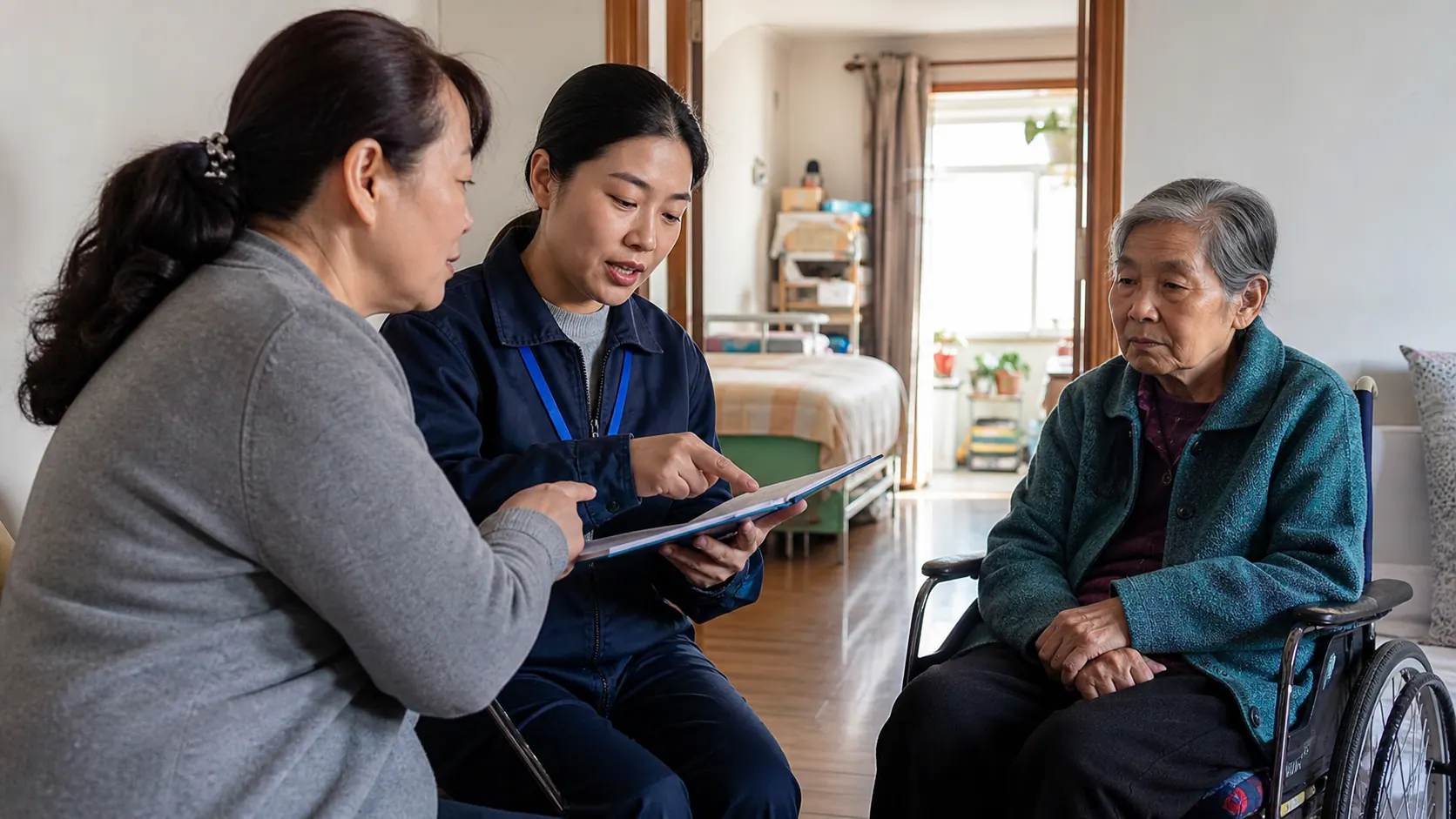
China began nationwide implementation in 2026 of consumption subsidies for older people assessed with moderate or greater loss of ability. Zhejiang has since broadened eligible home-care providers, allowing qualified domestic-service, nursing and property-service businesses to participate when they meet care-workforce conditions.
A subsidy can turn unmet need into purchased help and support ageing at home. It can also create a market in assessments, packages and confusing charges. The policy will be judged at the front door: whether an older person receives reliable assistance that matches need, without the family becoming an unpaid case manager.
Assessment is a gateway
Ability assessment must be consistent, appealable and periodically reviewed. A single interview can miss fluctuating cognition, falls, continence or the night-time load carried by family carers.
The voucher must buy real time
Service units should state minutes, tasks, worker skill and travel. Bundled labels such as “home support” are too vague to compare and can conceal shortened visits.
Expanding providers requires common standards
Domestic and property firms may bring reach, but elder care involves transfers, dementia, medication boundaries and safeguarding. Training, supervision, background checks and insurance must follow the task.
Protect the worker as well as the recipient
Continuity depends on wages, travel pay, rest, injury prevention and a route to refuse unsafe lifting. Subsidised low prices should not be financed through rushed visits and unstable labour.
Families need navigation
Older people may struggle with apps, assessments and provider selection. Community workers should offer neutral help, including an offline route and clear explanation of co-payment and expiry.
Prevent price inflation and tied sales
Publish reference prices and complaints. Providers should not require families to buy unrelated products or convert a public subsidy into opaque memberships.
Measure outcomes and continuity
Track falls, hospital use, carer strain, missed visits, worker turnover, complaints and rural access, not merely vouchers redeemed. Fraud controls should target patterns without making every family prove need repeatedly.
A bridge toward long-term care
A temporary project can reveal demand and delivery gaps. Its evidence should inform durable long-term care financing rather than leave families facing a cliff when the pilot ends.
Care consumption is not ordinary retail. The person receiving it may depend on the same worker to get out of bed. Quality, continuity and dignity must be designed into the subsidy.