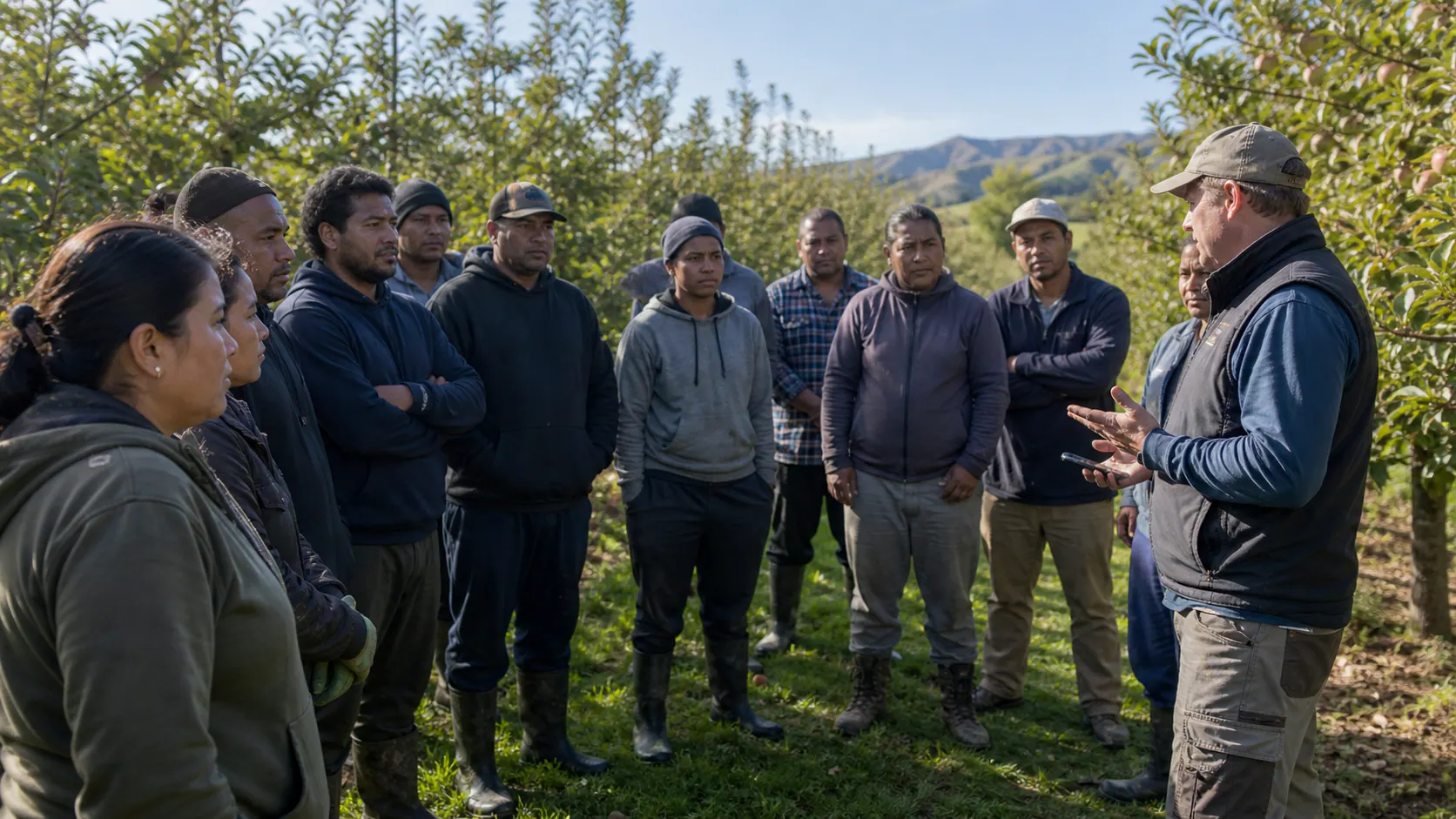
New Zealand’s Recognised Seasonal Employer scheme connects horticulture and viticulture businesses with Pacific workers whose earnings support families and communities. The Government announced further modernisation in July 2026, presenting the changes as simpler for employers while retaining protection and opportunities for New Zealanders.
Administrative simplicity can be worthwhile, but the scheme’s moral test is not completed in an immigration form. It is experienced in the worker’s payslip, transport, room, access to health care and freedom to raise a problem without risking future recruitment.
A visa creates structured dependence
RSE workers generally enter for a named purpose and rely heavily on employers or coordinators for work, accommodation and transport. That concentration of power can make an apparently voluntary deduction difficult to refuse. Clear national rules must be matched by confidential ways to test what happens in practice.
Gross pay is not usable income
Workers need contracts and payslips they can understand before travel. Hours, weather interruptions, tax, accommodation, flights and transport deductions should be modelled with realistic scenarios. A lawful hourly rate can still produce disappointing income when work is irregular and fixed charges continue.
Housing is part of the labour system
Inspection should cover crowding, heating, cooking, privacy, internet access and distance from shops or health services. A bed is not adequate housing merely because it passes on arrival day. Workers need a route to report deterioration and repair delays.
Mobility and employer transfer
A system that prevents reasonable movement can trap a worker when hours disappear or relationships break down. Transfers require safeguards against poaching, but should be timely where exploitation, illness or lack of work is established. Independent navigation support is essential.
Pacific partnership must include the household
Sending countries carry recruitment, health and reintegration consequences. Consultation should include workers and families, not only governments and industry. Fees charged before departure and informal broker practices need monitoring across borders.
Enforcement should measure outcomes
Audits must combine documents with private worker interviews, repeat visits and analysis of deductions, hours and complaints. Publication should show remediation and repeat non-compliance without exposing workers.
The scheme succeeds when workers return home with the income and dignity they were promised, and when productive employers are not undercut by businesses that transfer cost and risk onto people with less bargaining power.
Recruitment begins before the New Zealand contract
Protection has to reach the period before departure. Workers may borrow for travel, medical checks or household preparation, and an informal promise about hours can shape those decisions. Approved employers and sending-country agencies should disclose every expected charge in one comparable statement, identify who receives each payment and prohibit undisclosed broker fees. A worker should have time to obtain independent advice before accepting, with translated material available in the languages actually used at home.
Return and reintegration also belong in the design. Skills records, savings options, access to superannuation refunds where applicable and clear pathways for reporting a late-discovered wage problem should remain available after departure. A short visa must not create a short limitation period in practice.
Worker voice needs more than a survey
Anonymous surveys can reveal patterns, but workers need representation while decisions are live. Community advocates, unions, Pacific liaison services and consular teams require access that does not depend entirely on employer permission. Complaints should be triaged quickly because a remedy delivered after the season may arrive after the worker has lost income, housing and the chance of being invited back.
The Government should publish an annual scheme account covering median take-home earnings after common deductions, hours lost to weather, accommodation costs, transfer requests, injuries, complaints and employer stand-downs. That evidence would let the public judge whether simplification has improved productive work or merely reduced visible paperwork.