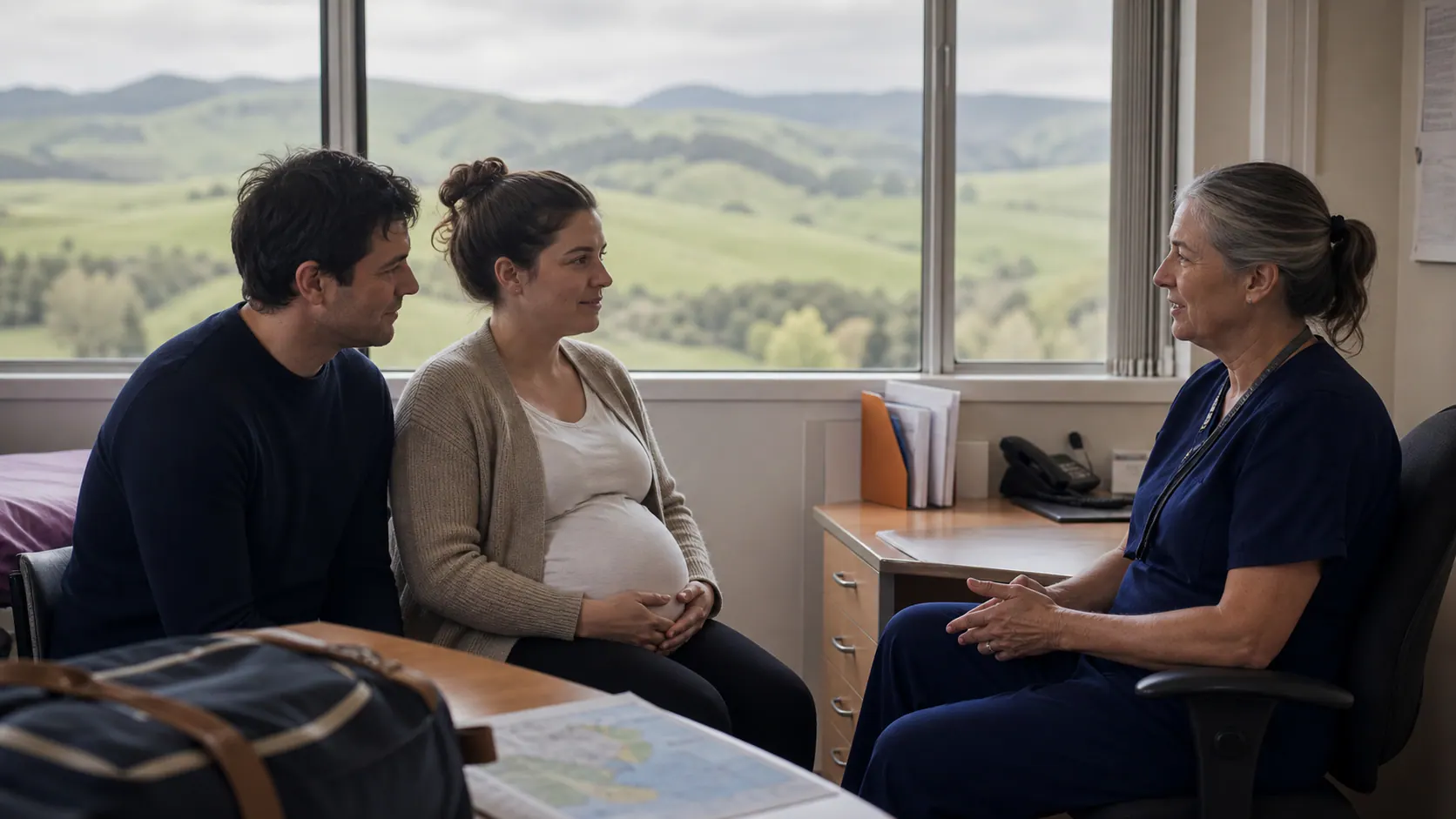
Pregnancy is scheduled through appointments, but labour is not. For a rural family, the distance to a birthing unit or specialist service shapes every decision: when to leave, who drives, where other children stay and what happens if weather closes a road.
New Zealand’s Primary Maternity Services Notice includes rural practice and travel supplements and transfer support. Those mechanisms acknowledge geography, but safe access depends on a whole pathway rather than reimbursement alone.
Distance changes clinical planning
Travel time, road reliability and ambulance availability should be discussed early. A kilometre is not equivalent across winding roads, ferries and winter conditions.
Plans need thresholds for escalation and realistic alternatives.
Continuity builds confidence
Knowing the midwife or team helps families communicate symptoms and preferences. Workforce shortages can replace continuity with repeated introductions.
Rural retention requires sustainable caseloads, relief cover, housing and professional support.
Transfers need two directions
An urgent transfer focuses on reaching higher-level care. The practitioner’s return, the family’s accommodation and the trip home after discharge also matter.
A safe transfer system should not create a financial crisis.
Accommodation is health infrastructure
Some families are advised to relocate before birth. Affordable, culturally safe accommodation near care can reduce risk without separating whānau unnecessarily.
Eligibility and booking should be clear before the final weeks.
Equity requires flexible service
Māori communities should shape local pathways, including links with whānau, iwi providers and kaupapa Māori services. Telehealth can support consultation but cannot replace physical care.
Data should track travel burden and missed care, not only completed appointments.
A national promise with local reality
Safe maternity care means a rural postcode does not quietly reduce choice or increase danger. Funding formulas must follow actual travel and workforce conditions.
The outcome to watch is not simply where a baby is born, but whether the family reached skilled care with continuity, dignity and a workable journey home.