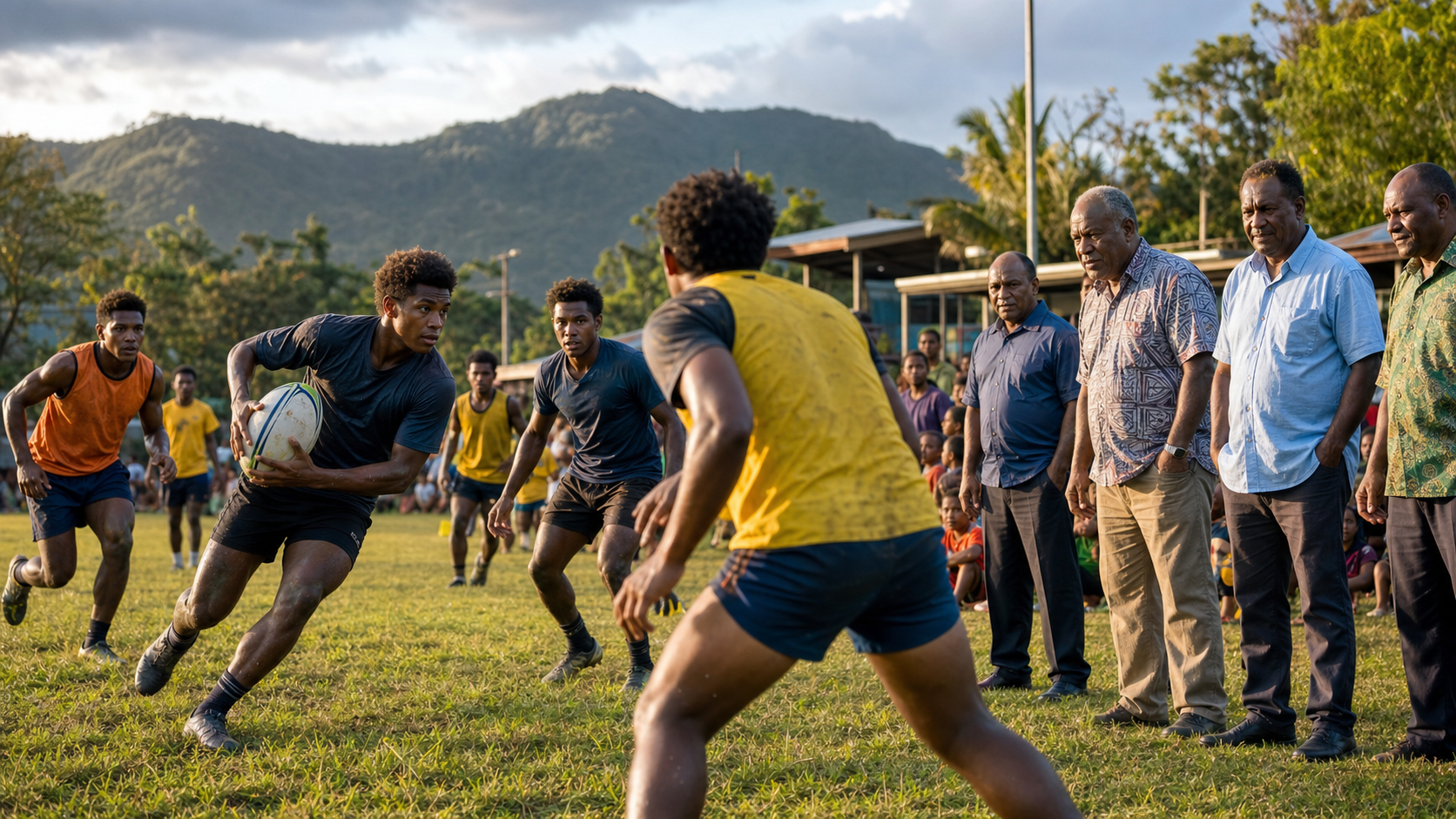
Rugby league is not a side issue in Papua New Guinea. It is a national language of pride, community and aspiration. That is why Australia’s support for PNG’s push into elite rugby league is politically meaningful. It uses something emotionally real to build something strategically useful.
ABC reported on the diplomatic string attached to Australia’s support for PNG’s rugby league ambitions. The story belongs in a wider Pacific context: Australia is trying to deepen ties, compete for influence, support youth pathways and show it can offer more than formal security speeches. In the Pacific, sport can become diplomacy precisely because it is not experienced by communities as diplomacy first.
Why rugby league carries unusual weight
In many countries, sport is entertainment. In PNG, rugby league has a different intensity. It connects villages, schools, churches, towns, urban settlements and national identity. A pathway into a top-tier competition can feel like recognition of the country’s talent and status, not only a commercial expansion.
That gives Australia a powerful tool. Supporting the project can build goodwill in a way that infrastructure loans or defence communiques cannot. It can speak to young people, families and fans who may never read a strategic policy document but know exactly what a professional team would mean.
The strategic layer
Australia’s Pacific policy has become more urgent as China, the United States and regional partners compete for influence. Security agreements, policing support, climate finance, labour mobility and infrastructure are all part of the contest. Sport adds a softer layer, but it is still part of the same strategic environment.
A rugby league team can create links through broadcasting, sponsorship, training, travel, education and community programmes. It can also bind PNG more closely into Australian institutions and cultural circuits. That is why critics will ask whether the project is genuinely about PNG opportunity or partly about keeping PNG within Australia’s strategic orbit. The honest answer may be both.
Soft power works only when it is not cynical
The danger with sport diplomacy is instrumentalising people’s passion. If fans feel their national dream is being used mainly as geopolitical packaging, the goodwill can sour. A credible project has to deliver real benefits: pathways for players, investment in facilities, local coaching, women’s participation, community programmes, governance support and long-term financial sustainability.
It also has to respect PNG agency. PNG is not a prize in a contest between larger powers. It has its own leaders, voters, businesses, communities and interests. If the rugby project succeeds, it should be because PNG people see value in it, not because Australia needs a symbolic win.
The development question
Sport can change lives, but it cannot substitute for health, education, safety and employment policy. A professional team might inspire young people and open pathways for some athletes. It will not by itself solve youth unemployment, gender-based violence, school access or rural infrastructure. The strongest version of sport diplomacy recognises that limitation and builds community support around the sport rather than pretending the sport solves everything.
For Australia, the lesson is similar. Pacific influence is earned through reliability. A rugby league project can help, but only if paired with climate credibility, respectful diplomacy, labour rights, visa settings and a willingness to listen when Pacific leaders set their own priorities.
What to watch
Watch the governance model, funding commitments, player pathways, security conditions and community investment. Watch whether the project includes women and grassroots participation, or whether it becomes mostly an elite men’s competition story. Watch how PNG media and communities describe it, not only how Australian officials frame it.
The rugby league dream is powerful because it is real. That is also why it should be handled carefully. In the Pacific, soft power is strongest when people can feel the benefit before they can see the strategy.
Source: ABC on Papua New Guinea rugby league and Australian Pacific diplomacy.