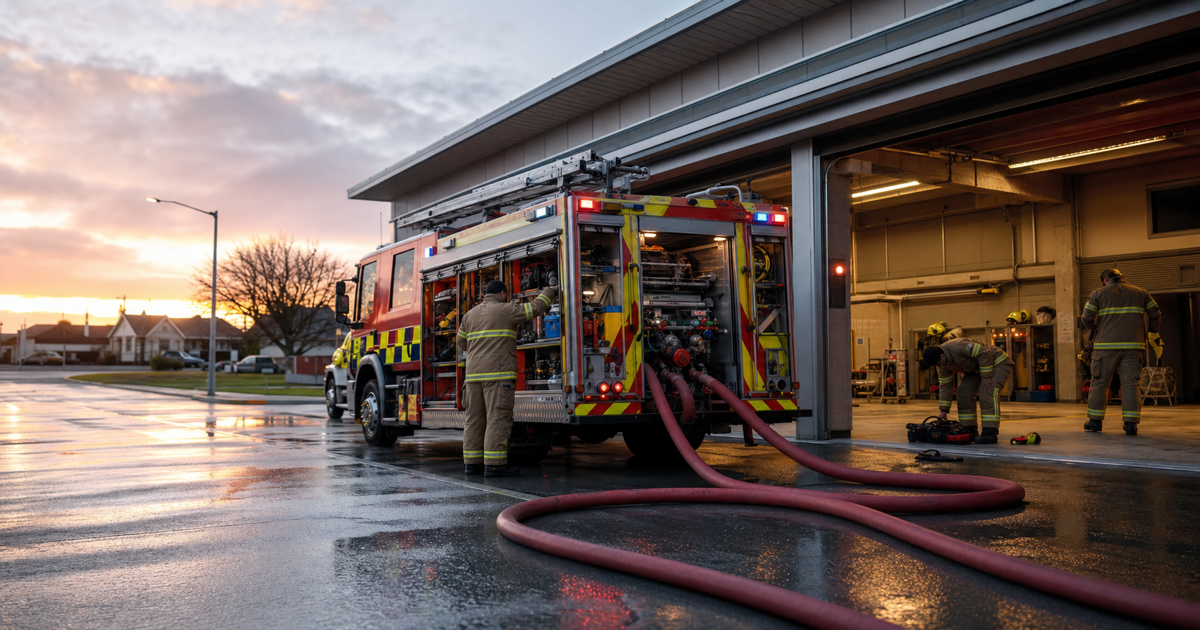
RNZ reports that Internal Affairs Minister Brooke van Velden has directed officials to explore a new funding model for Fire and Emergency New Zealand. The immediate policy detail is the insurance levy: FENZ is mainly funded through a levy collected from insurance premiums, and the minister is questioning whether that is the right channel.
The levy is not a small technicality
Funding emergency services through insurance has a surface logic. Property risk and fire response are connected. But modern emergency readiness is much wider than house fires. FENZ is called into storms, floods, crashes, rescues, vegetation fires, hazardous incidents and community preparedness. That is a broad public-good function, not simply a service for insured property owners.
The insurance link also creates a fairness problem. People who are underinsured, uninsured, renting, or already struggling with premium increases do not sit neatly inside the system. If the levy rises, it can make insurance less affordable. If insurance becomes less affordable, more households may reduce cover. That can make the public system more fragile, not stronger.
What a serious review should ask
- Does the funding base match the actual work FENZ now performs?
- Would a broader Crown contribution better reflect emergency readiness as a national public service?
- How would any change affect households already facing high insurance, rates and living costs?
- Can funding reform protect volunteer brigades and rural readiness, not just balance a central budget?
The danger is that the review becomes a narrow search for a cleaner invoice. It should be bigger than that. New Zealand has just been through years of weather, infrastructure and resilience lessons. Emergency readiness is one of those systems people only notice when they need it. The funding model should make that readiness stable before the siren goes off, not argue about it afterward.
If ministers want to move away from the insurance levy, they should be plain about the tradeoff: either the cost shifts to general taxation, to another targeted charge, or to some hybrid model. None of those choices is free. But the current model is not neutral either. It embeds a view that emergency services are mainly attached to insured assets. In a climate-stressed country, that assumption is looking increasingly old.