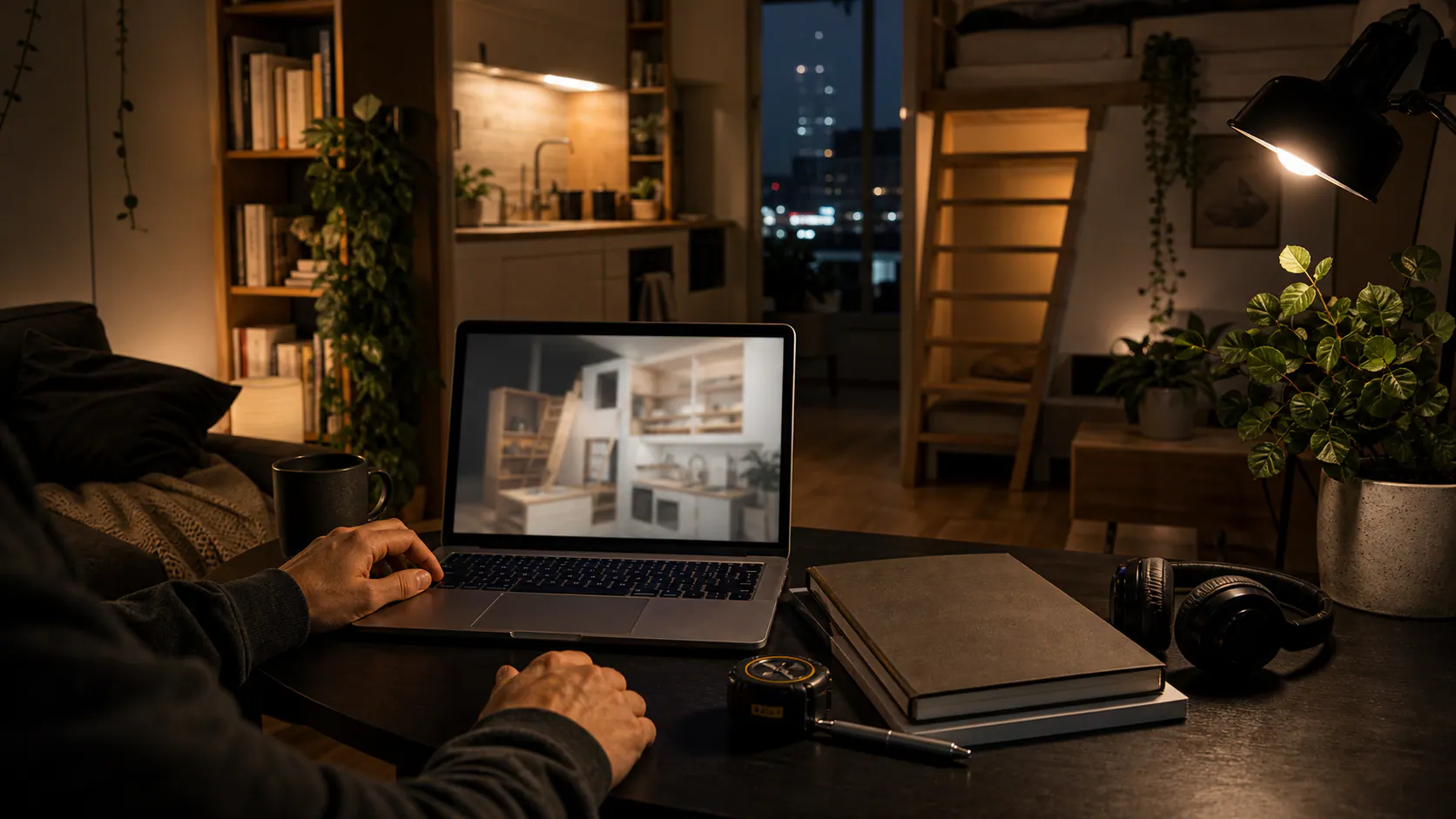
Small homes are easy to romanticise and easy to design badly. Never Too Small is worth recommending because its best videos do neither. The channel treats compact living as a design problem, not an aesthetic slogan. Its New Zealand Backyard Flexible Micro Loft episode is especially useful for local viewers because it makes density, flexibility and privacy feel tangible rather than abstract.
What this is
The video, titled NEVER TOO SMALL New Zealand Backyard Flexible Micro Loft – 36sqm/387sqft, tours a compact New Zealand dwelling and explains how a small footprint can be made more liveable through storage, light, vertical volume, flexible use and careful detailing.
Never Too Small’s format is simple but effective: show the space, explain the design moves, let the viewer see how daily life fits. It is not a property sales video. It is closer to a design case study that happens to be watchable.
Why it is worth your time
New Zealand is having a long argument about housing supply, density, affordability and neighbourhood change. Much of that debate stays at policy altitude. This video brings the issue back to the scale of a room: where do you sleep, work, cook, store things, invite someone in, get daylight, and feel that home is not just a bed with a kitchenette?
That matters because compact living succeeds or fails in details. A small home with poor storage becomes clutter. A small home with bad light feels punitive. A small home with no acoustic or visual privacy can feel temporary even when it is permanent. A good compact design is not simply smaller; it is more deliberate.
What to notice while watching
- Vertical space.Small floor area can feel larger when height, shelving and sleeping arrangements are handled intelligently.
- Storage discipline.Good small homes make storage part of the architecture, not an afterthought.
- Outdoor connection.A compact dwelling changes when it borrows light, view and threshold from outside.
- Flexibility.The best small spaces are not one-use boxes. They let a room shift across the day.
Who should watch it
This is a good watch for renters, first-home dreamers, architecture students, planners, tiny-home fans and anyone who feels the housing debate has become too abstract. It is also useful for homeowners thinking about secondary dwellings, garden studios or intergenerational living.
For Christchurch, Wellington and Auckland viewers, the episode is a reminder that density does not have to mean misery. But it also shows why design quality matters. A small dwelling can be humane, or it can be a cramped compromise. The difference is not marketing. It is design, regulation and build quality.
A caveat
Beautiful small-space videos can make compact living look easier than it is. Real life includes laundry, illness, visitors, noisy neighbours, children, disability, hobbies and too many winter coats. A good video should inspire ideas, not become a universal answer.
Final recommendation: watch it with your own home in mind. The point is not to copy the micro-loft exactly. The point is to notice how much space can be recovered when design stops wasting it.
Sources: Never Too Small video on YouTube, Never Too Small official site and Never Too Small YouTube channel.