Every now and then, medicine encounters a case that seems almost impossible.
A liver tumor shrinks without standard cancer treatment. A patient gives up smoking and drinking, and the cancer marker falls back to normal. Another develops a serious viral infection, and months later the tumor is gone. These stories sound extraordinary because they are. But according to the medical cases discussed in the program, spontaneous regression of liver cancer, while extremely rare, has been documented in the medical literature for decades.
That does not mean liver cancer should be left untreated, or that food alone can cure cancer. What it does suggest is something both humbling and fascinating: the human body may sometimes do more than we expect, especially when immunity, inflammation, blood supply, and lifestyle all shift in powerful ways.
This is perhaps the most important message for readers to remember: miracles are rare, but the body’s defenses matter every day.
Three reasons liver tumors may sometimes shrink on their own
The program outlined three main explanations that appear again and again in reported medical cases.
The first is loss of blood supply. Liver tumors rely heavily on oxygen and nutrients delivered through blood vessels. In one case discussed in the program, a patient with poor kidney function later needed dialysis. After undergoing hemodialysis, the liver tumor disappeared on follow-up. The explanation offered was that changes in circulation may have created a temporary ischemic state, depriving the tumor of what it needed to survive. Similar mechanisms may also happen after bleeding, surgery, or blockage of a vessel feeding the tumor.
The second is removing the fuel that helps cancer grow. One case involved an older man whose liver cancer was associated with long-term smoking and drinking. During hospitalization, he stopped both. More than a month later, the tumor had shrunk, and his liver cancer marker, once extremely high, had gradually returned to normal. That does not prove quitting alcohol and tobacco will reverse cancer in most patients, but it strongly reinforces a truth medicine already knows: when the body is no longer constantly exposed to harmful triggers, it may recover some of its ability to fight back.
The third is immune activation. This may be the most intriguing explanation of all. The program described a Brazilian man with a large liver tumor and metastatic spread who became infected with COVID-19 just before treatment. One month later, the tumor had shrunk dramatically, and later follow-up reportedly showed complete disappearance of the main lesion with shrinkage of the metastatic sites as well. The suggested explanation was that the viral infection may have triggered a strong immune response that, unexpectedly, also attacked the cancer.
The lesson here is simple and memorable: cancer does not grow in isolation. It grows inside a body, and the state of that body matters.
The vegetables in the story that surprised everyone
Among the most memorable parts of the program were two elderly women with cirrhosis and liver cancer who did not undergo active treatment. Both were encouraged to eat sweet potato leaves, and both were also eating apples regularly. In one case, the leaves were blended into juice because chewing was difficult; in the other, they were lightly cooked and eaten with olive oil and salt. One patient reportedly had a very high alpha-fetoprotein level for a long time, but after about three months of eating sweet potato leaves, the marker dropped back to normal, and there was no recurrence even after a long follow-up period.
This is the kind of story that catches attention immediately. But it is important to read it the right way.
The doctor in the program was careful not to claim that sweet potato leaves or apples are a proven cure for liver cancer. These were clinical observations, not a large randomized trial. Still, the cases are thought-provoking because they point toward a broader principle: food may not perform miracles on command, but nutrition shapes the biological environment in which disease either progresses or is resisted.
That is a message worth remembering.
If there is one liver-protective nutrient to remember, it is glutathione
The program placed special emphasis on glutathione, one of the liver’s most important protective compounds. Glutathione helps the liver detoxify harmful substances and also helps neutralize free radicals, the unstable molecules linked to inflammation, aging, DNA damage, and cancer risk.
But here is the key point: the doctor did not recommend relying on glutathione supplements as the main answer. Instead, the focus was on helping the body make its own glutathione naturally by eating the right building blocks, especially foods rich in sulfur-containing compounds and quality protein.
That gives readers an easy memory hook:
Don’t just swallow glutathione. Feed your body what it needs to make it.
The foods the program highlighted most
If readers remember only a few foods from the episode, these are the ones that stood out.
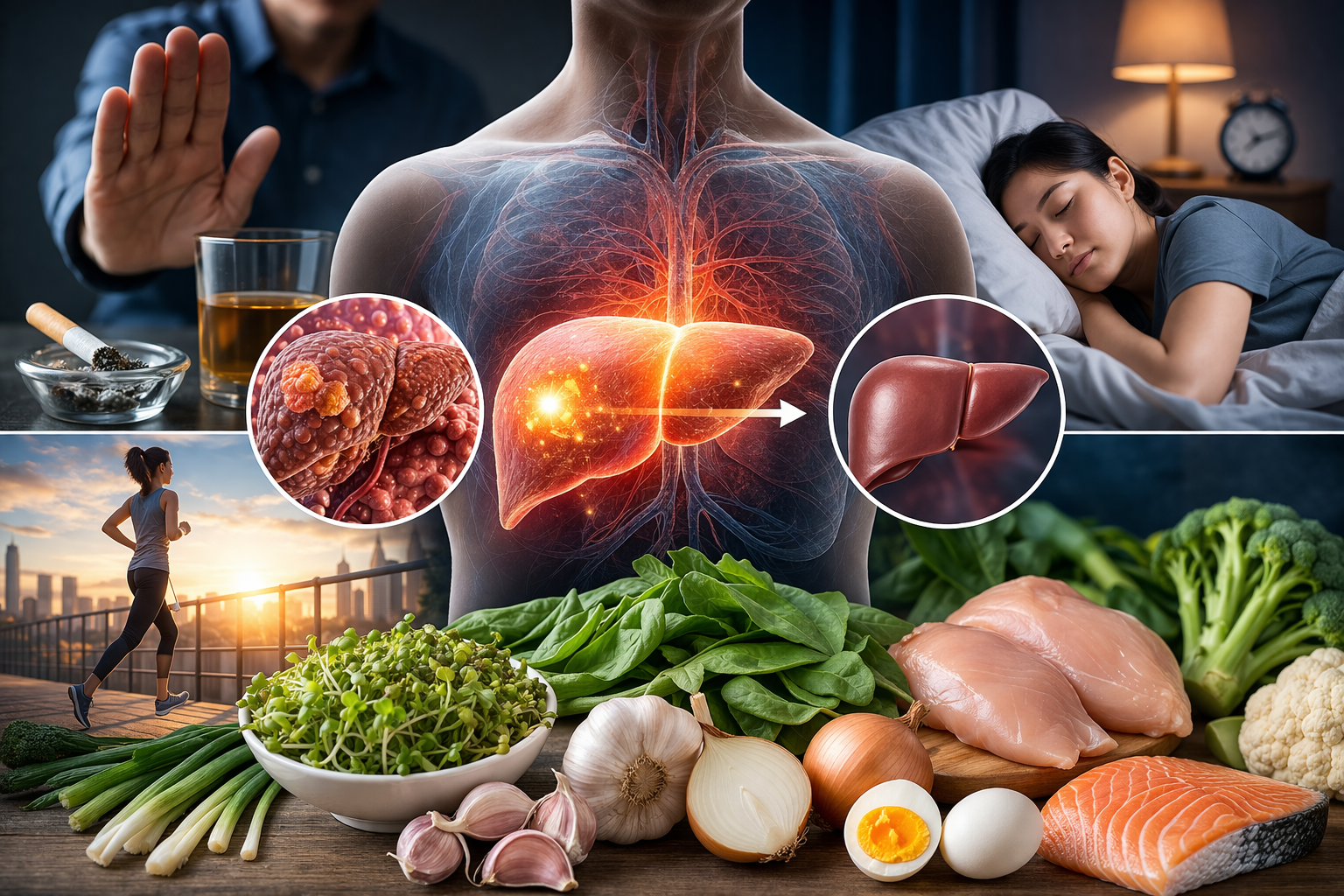
First came the cruciferous vegetables, especially broccoli sprouts. The program described broccoli sprouts as particularly rich in glucosinolates and other sulfur-containing compounds associated with anti-cancer benefits. It even suggested that these compounds are far more concentrated in the sprouts than in mature broccoli. Other young greens and sprouts were also mentioned as good options when broccoli sprouts are not available.
Second came the strong-smelling kitchen staples: garlic, onions, scallions, and Chinese chives. The doctor explained that their distinctive smell comes from sulfur compounds, and that these same compounds are part of what makes them valuable for liver protection and possible anti-cancer support. Raw forms may preserve more of these compounds, while prolonged cooking may reduce them.
Third came high-quality protein, especially egg yolks, poultry, and fish. Chicken breast was specifically noted as a good source of cysteine, one of the amino acids the body uses to produce glutathione. Vitamins such as B-complex and minerals such as selenium were also mentioned, but more as supporting players than the main act. In the program’s framing, protein is the foundation.
That gives us another easy line readers can carry away:
For liver protection, think sprouts, sulfur, and protein.
Sleep may matter more than most people think
One of the strongest public-health messages from the program had nothing to do with exotic foods or rare cases. It was about sleep.
The doctor cited a large 2023 study involving 296,000 people and said the findings suggested that both too little sleep and too much sleep were associated with higher liver cancer risk. Sleeping too little was linked to about double the risk, while sleeping too much was associated with a smaller but still elevated risk. The sweet spot, according to the discussion, was around seven to eight hours a night. Long daytime naps were not presented as a true substitute for adequate nighttime sleep.
Why would sleep matter so much? Because sleep is when the body restores many of its protective systems. It supports antioxidant balance, hormone regulation, immune function, and DNA repair. In other words, sleep is not “rest” in the passive sense. It is biological maintenance.
A simple phrase sums it up well:
The liver does not only need good food. It needs good nights.
What readers should truly take away from all this
The most dangerous misunderstanding would be to hear these stories and think, “Maybe treatment isn’t necessary.” That is not the lesson.
The real lesson is more grounded and more useful.
Rare cases of spontaneous regression remind us that the body’s internal environment matters. Blood flow matters. Inflammation matters. Immunity matters. What we eat matters. How we sleep matters. Whether we keep smoking and drinking matters. None of these things guarantees a cure, but all of them influence the conditions in which disease either advances or meets resistance.
So perhaps the healthiest way to remember this story is through four short lines:
Quit what harms the liver.
Eat what helps the body defend itself.
Sleep enough, but not too much.
Never confuse a rare miracle with a treatment plan.
That balance, between hope and realism, may be the most valuable health advice of all.