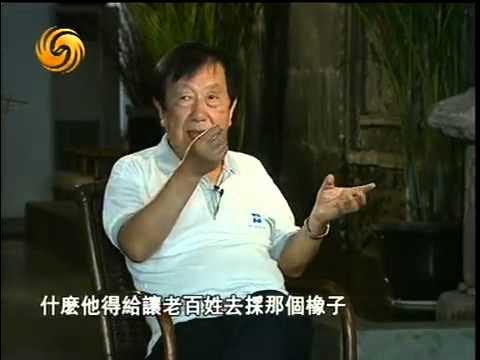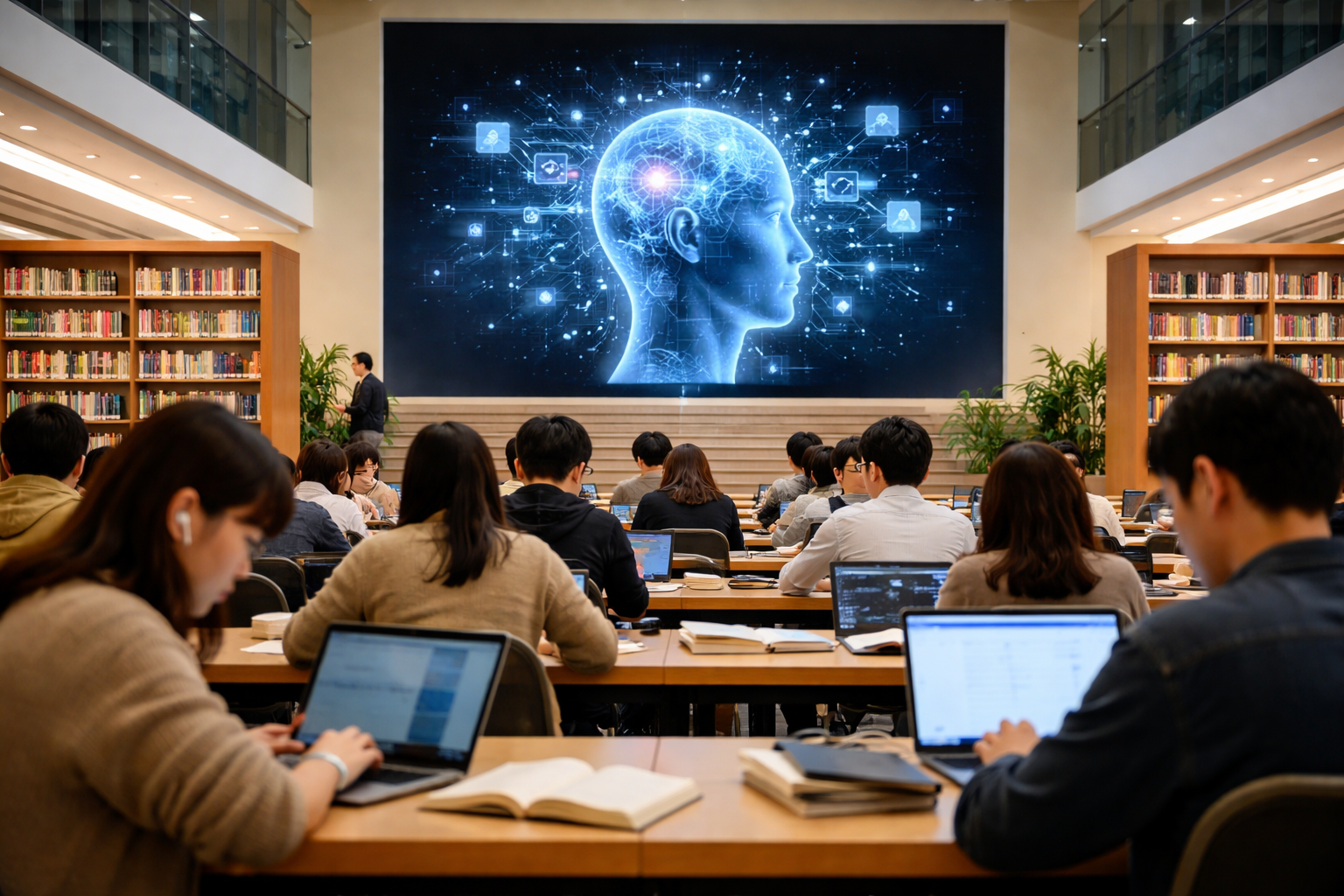
China’s Communication University of China has sparked a fierce debate after its party secretary, Liao Xiangzhong, said the university had cut 16 undergraduate majors and directions, including translation and photography, as part of a response to the artificial intelligence era. The remark quickly went viral. But the university’s own follow-up makes clear this was not simply a case of “AI kills the arts” or “the humanities are finished”. Some programs were merged, some were upgraded, and some were reorganised into broader degrees. Photography, for example, was folded into film and television photography and production rather than simply abolished.
That distinction matters.
The most misleading way to read this story is as proof that AI has made disciplines such as translation, photography or media studies obsolete. A more accurate reading is that universities are beginning to question whether narrowly defined, technique-heavy degrees still make sense when machines can now perform many entry-level technical tasks faster, more cheaply and at scale. Communication University of China has said this forms part of a longer-running reform agenda, launched in 2018, built around closing, merging, upgrading and redesigning programs as technologies and industries change.
This is not happening in isolation. China’s Ministry of Education said that in the 2024 round of undergraduate program approvals, universities added 1,839 program points, but also revoked 1,428 and suspended enrolment in another 2,220. In other words, higher education is already in the middle of a major structural reset.
So what is really going on?
At one level, universities are reacting to a genuine technological shock. In fields such as translation, image production, editing and routine content creation, generative AI has changed what counts as a basic skill. A student can now get a usable translation draft, a rough visual concept, a transcript, subtitles or even a polished promotional image in seconds. If a degree is built mainly around training students to perform tasks that software now automates, universities have good reason to rethink the curriculum.
But this does not mean the underlying disciplines have lost their value. It means the old model of training may no longer be enough.
Take translation. AI is increasingly effective at first-pass translation and other standardised language tasks. But it still struggles when language becomes deeply cultural, emotionally loaded, politically sensitive or professionally specialised. Literary translation, diplomatic nuance, legal ambiguity, multilingual interviewing and cross-cultural interpretation still require human judgement. In practice, the real future of translation is probably not no humans, but different humans: people who can work with AI tools while also spotting errors, reading context and understanding what cannot be translated literally.
Photography and media production face a similar shift. AI can now generate images, enhance photos, clean up audio, simulate sets and produce endless variations of visual content. That changes the value of technical routine. But journalism, documentary work and serious visual storytelling depend on much more than technique. They require judgement, ethics, fieldwork, narrative intelligence and an understanding of what images mean in public life. A synthetic picture can look impressive; that is not the same as witnessing reality.
This is why the most important line in this debate is not that a university “cut” a group of majors. It is that universities are being pushed to redefine what a degree is for.
Communication University of China has not only removed or merged older programs. It has also added new ones tied to AI-era media production, including intelligent imaging art, intelligent audiovisual engineering and intelligent engineering and creative design. In an official interview, Liao said the university had added 20 majors between 2018 and 2025 as part of this larger restructuring.
That suggests the story is not one of simple contraction. It is one of repackaging and reprioritising knowledge.
For universities elsewhere, including in Australia and New Zealand, there are at least three lessons here.
First, higher education should stop treating AI literacy as a niche technical add-on. It is becoming part of basic professional competence across communication, education, business and the creative industries. Students need to know not only how to use AI tools, but when not to trust them.
Second, universities should be careful not to confuse efficiency with education. If AI can help students complete tasks faster, that can be useful. But the purpose of university is not merely to produce outputs quickly. It is to build judgement, interpretation, ethical reasoning and the ability to connect knowledge with public life. Those are precisely the capacities that become more important when machines can imitate competence.
Third, the humanities and creative disciplines should not retreat in the face of AI. They should become more ambitious. In an AI-saturated environment, the ability to interpret culture, understand audiences, verify claims, explain complexity and make ethical decisions becomes more valuable, not less. The danger is not that students will study literature, languages or media. The danger is that they will study them in old formats that ignore how work, communication and knowledge are changing.
The panic around Communication University of China’s decision reflects a wider anxiety shared by universities around the world: if AI can now do so much of what students once spent years learning, what exactly should higher education teach?
The answer is not to abandon disciplines such as translation, photography or journalism. It is to redesign them around the things machines still cannot do well: judgement, responsibility, social understanding, creativity with purpose, and the ability to decide what matters.
AI may reduce the value of training students to follow predictable procedures. It may even force universities to retire some familiar degree structures. But that is not the same as making humanistic or creative education irrelevant.
If anything, it raises the stakes for getting that education right.