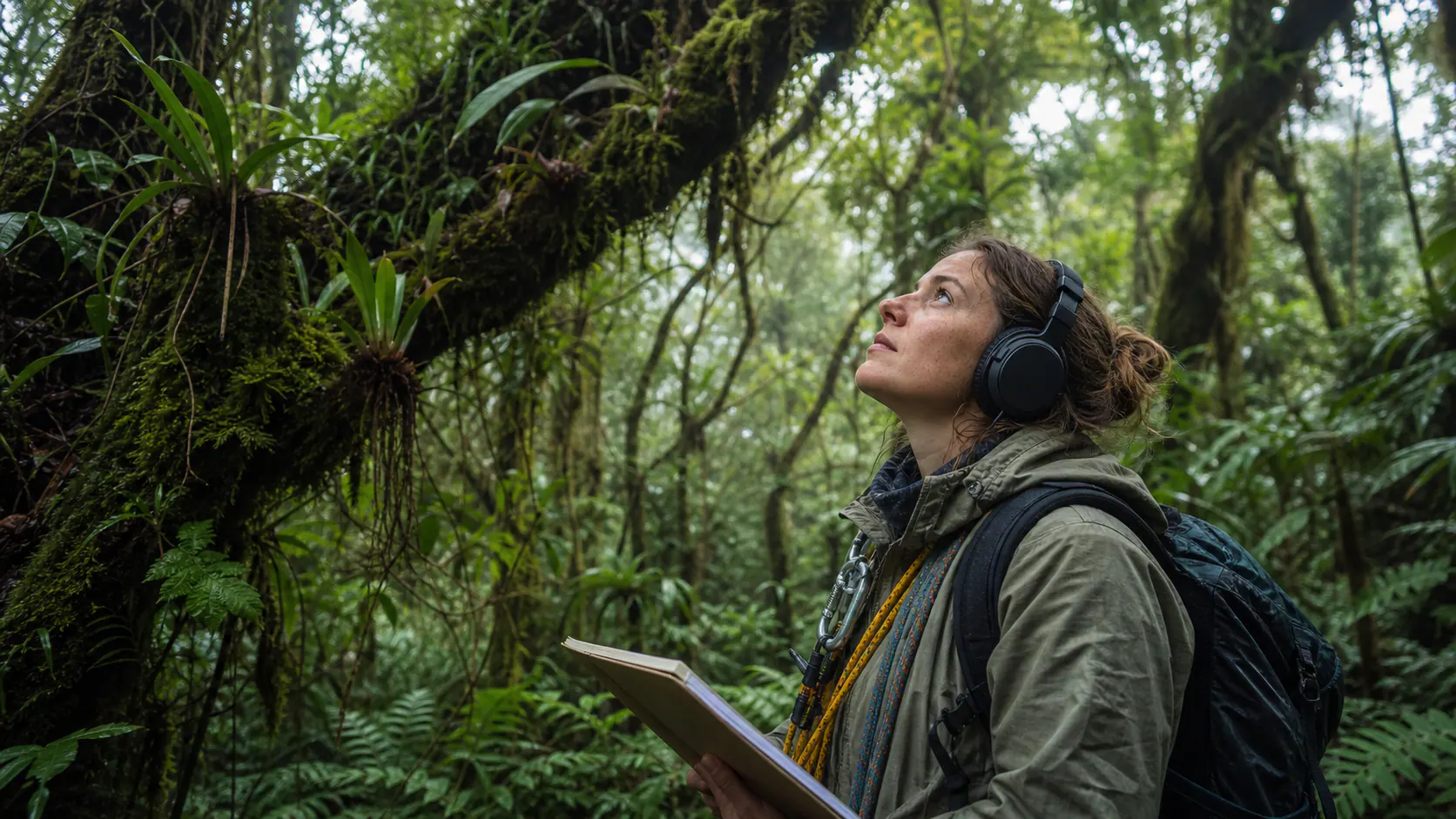
A forest is usually described from the ground: trunks, roots and soil beneath our feet. Radiolab’s “Forests on Forests” asks listeners to look up, into canopy mats where moss, organic material and epiphytes create habitat high above the conventional forest floor.
The 2026 release revisits a story produced by Annie McEwen with Robert Krulwich and follows scientists whose climbing changed what they could observe. Its pleasure comes from discovery, but its strongest idea is methodological: an ecosystem can remain invisible because researchers have been standing in the wrong place.
The canopy is not empty space
Branches collect living and decomposing material, moisture and organisms. These elevated layers influence nutrient cycles and provide niches that ground-based surveys miss.
Access changes knowledge
Ropes, platforms and climbing practice are research infrastructure. New access methods do not merely collect more samples; they change the questions scientists can ask.
Listen for the storytelling choices
Radiolab uses sound, surprise and metaphor to create momentum. Listeners should enjoy the form while distinguishing measured findings from the programme’s more playful language.
Avoid the single-secret explanation
Forests contain competition, cooperation, disturbance and variation. One compelling network or canopy process should not become a universal personality assigned to every tree.
Why this episode stays useful
It encourages a productive kind of humility: absence of evidence can reflect absence of access. After listening, even an ordinary tree looks less like a single object and more like layered habitat.